
Princess Mononoke: Can We See Clearly Without Hatred?
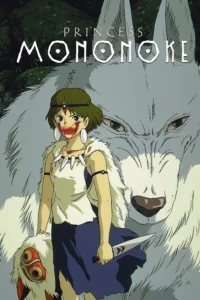
| 🎬 Title & Year | Princess Mononoke (1997) |
| 🎥 Director | Hayao Miyazaki |
| 👥 Starring | Yōji Matsuda, Yuriko Ishida, Yūko Tanaka, Kaoru Kobayashi, Akihiro Miwa |
| 🕒 Genre / Runtime | Animation, Fantasy, Adventure, Drama • 133 minutes |
| 🔞 Rating | PG-13 |
| ✝️ Core Faith Themes | Discernment, Love, Hatred, Stewardship, Human Pride, Restoration |
| 📖 Key Scripture | Ephesians 4:26–27; Matthew 5:44; Romans 3:8; Genesis 2:15; Romans 12:18 |
Table of Contents
Among Hayao Miyazaki’s films, Princess Mononoke was one I had especially looked forward to watching, and I want to reflect on it with you today. Princess Mononoke is far more than an animated story about conflict between humans and nature. As the story unfolds, it becomes increasingly difficult to call one side entirely good and the other entirely evil. The humans damage the forest, yet they are also building communities, working, and trying to survive. The forest gods and animals fight to protect their home, but they too become consumed by anger and hatred toward humanity. Standing in the middle of this conflict is Ashitaka, a character who refuses to look at the world through such simple categories.
Themes like these also remind me of documentaries I have written about, especially Seaspiracy. In stories like these, the deeper we look, the harder it becomes to divide everyone neatly into heroes and villains. From a Christian perspective, that eventually leads us toward an uncomfortable truth: all of us are sinners. The question is not simply which side contains evil, but how sin, fear, self-interest, and even sincere love can shape the choices made on every side.
For me, the Princess Mononoke biblical themes become most powerful through the questions the film refuses to answer too easily. How can we see clearly in a world filled with hatred? Is it right to hate someone because we are trying to protect what we love? Can destructive actions be justified when our intentions are good? And can we move forward after so much has already been destroyed? I want to look at the film through these five questions.
1. Ashitaka and the Discipline of Seeing Clearly
One of the most important things about Ashitaka is that his basic posture remains remarkably consistent from beginning to end. He never completely gives himself to only one side. He does not blindly defend the humans, nor does he automatically side with the forest. Instead, he tries to see what is happening without allowing hatred to blind him. That is much harder than it sounds.
When we are hurt, we naturally begin looking at the other person differently. When I was in high school, a friend once said something to me about love that I still remember: “No matter how good a person may be, if you keep looking only for that person’s flaws, eventually you will begin to see them as a bad person.” There is something painfully true about that.
We often notice weakness, failure, or what seems wrong with someone before we notice what is good. If someone attacks us, it becomes easy to define that entire person by what they did. If our community is harmed, it becomes easy to see everyone on the other side as an enemy. The stronger our anger becomes, the harder it is to see anything clearly.
The curse on Ashitaka’s arm illustrates this beautifully. As anger and hatred rise, the curse becomes more powerful. It gives him extraordinary strength in the moment, but at the same time, it is slowly leading him toward death. That feels very similar to the way anger can work in us. Anger can make us feel strong. It can make us speak more forcefully, act more decisively, and even feel braver than before. But when anger remains inside us long enough to control us, it can eventually damage not only the person we are angry with, but our own hearts as well.
Scripture does not teach that every form of anger is automatically sinful. Jesus Himself showed righteous anger when He confronted what was happening in the temple. None of us will go through life without becoming angry. The warning is not that anger must never exist, but that we must not allow it to rule us or carry us into sin. The deeper danger begins when anger covers our eyes and starts making our decisions for us.
Ashitaka tries to understand San’s rage, but he also tries to understand Eboshi’s reality. He sees the destruction of the forest without declaring every human evil, and he sees the people of Iron Town without ignoring the cost their survival places on creation. That posture matters. Perhaps people of faith should not always be the quickest to choose a side, but the ones willing to examine their own anger and prejudice first so they can see the truth more clearly.
It is difficult to see someone accurately while hating them. Once we have already decided who a person is, we often begin noticing only what confirms our conclusion. Ashitaka therefore leaves us with a deeply personal question: Am I seeing this situation as it really is, or am I seeing it through my anger? In moments like these, we need self-awareness. We need to recognize our own emotional condition before assuming that our first interpretation must be the truth.
2. San and Eboshi: Love That Hardens Into Hatred
San and Eboshi appear to stand on completely opposite sides. San loves the forest, while Eboshi is committed to protecting her human community. San attacks humans in defense of nature, while Eboshi damages the forest in order to preserve Iron Town. What makes their conflict so compelling is that neither woman begins with purely evil motives.
San loves the forest because it is her home and family. Raised among wolves, she sees the destruction caused by humans and responds with rage. Eboshi also loves the people under her care. She welcomes women who have been cast aside by society and gives work, purpose, and dignity to people suffering from leprosy. Both women are trying to protect something precious to them.
Yet that love begins to turn into hatred. San’s devotion to the forest grows into hatred for humanity, while Eboshi becomes willing to destroy the forest gods and other forms of life in order to secure her town. What begins as protection slowly becomes the belief that the other side must disappear if what I love is going to survive.
That matters because love does not automatically make every action righteous. We can attack another person in the name of protecting our family. We can despise another community because we are loyal to our own. We can claim to love our church while looking down on another church. We can even destroy another person’s dignity while convincing ourselves that we are defending something good.
There is another painful reality here as well. Many of the deepest wounds we experience do not come from complete strangers. They often come from people we love. A stranger rarely has the power to wound us in the same way a spouse, family member, close friend, or trusted community can. Love makes us vulnerable, and that vulnerability can sometimes become the place where anger and resentment grow.
When love becomes joined with fear, it can turn into control. When it becomes joined with unresolved anger, it can become hatred. The moment we begin thinking, “Because I love this, that must disappear,” love has already started moving in a dangerous direction.
Jesus told us to love our neighbors and even to love our enemies. That does not mean pretending evil is good or refusing to confront wrongdoing. Rather, it means that even while resisting what is wrong, we should refuse to erase the humanity of the person on the other side.
San and Eboshi want to destroy one another. Ashitaka, however, tries to save both. He does not believe peace requires one side to cease existing. Their conflict therefore leaves me with another question: Am I hating someone in the name of protecting what I love? If love is truly love, must it always require someone else’s destruction?
3. Good Intentions, Real Destruction
Lady Eboshi was one of the characters I found most fascinating in the film. In a simpler story, she would probably have been written as the obvious villain who destroys the forest. But that is not how Hayao Miyazaki tells this story.
Eboshi welcomes people society has rejected. She gives work and independence to women who have been marginalized, and she provides people suffering from leprosy with purpose, responsibility, and dignity. The people of Iron Town do not see her merely as a powerful leader. Many of them see her as someone who transformed their lives.
And yet she is also destroying the forest.
She cuts down trees to support iron production, fights the animal gods, and eventually pursues the head of the Forest Spirit itself. Her character therefore forces us to confront an uncomfortable question: Can good intentions justify the destruction caused along the way?
Eboshi is not simply greedy. Her leadership genuinely improves the lives of vulnerable people. Iron Town gives many of them a place to belong and another chance at life. But the prosperity of that community comes with a cost, and much of that cost is paid by the forest.
We face similar tensions in our own lives. Someone may work constantly because they want to provide for their family, only to lose their relationship with that family in the process. A church may pursue growth with sincere intentions while slowly beginning to see people as attendance numbers. A society may celebrate progress while asking the environment or vulnerable communities to bear most of the cost. A good goal does not automatically make every method good.
Scripture does not separate the goal from the way we pursue it. God does not care only about the result. He also cares about what kind of people we become and how we treat others along the way.
Watching Eboshi makes me wonder whether something can sometimes be more dangerous than openly selfish intentions: being so convinced of our good purpose that we become unable to see the damage we are causing. We may say, “I am doing something good. I am helping people. I am protecting my community.” Those statements may all be true, but they do not automatically erase the harm created by our choices.
Perhaps that means good intentions should make us examine ourselves more carefully, not less.
What price is someone else paying for the good thing I am trying to accomplish?
Comparative Analysis: San, Eboshi, and Ashitaka
| Character | What They Love | Danger | Spiritual Question |
|---|---|---|---|
| San | The forest and the beings who raised her | Love becomes hatred toward humanity | Can I protect what I love without hating those who threaten it? |
| Eboshi | The people of Iron Town, especially the marginalized | A good purpose begins justifying destructive means | What price are others paying for the good I am trying to accomplish? |
| Ashitaka | Life on both sides of the conflict | Being surrounded by hatred without surrendering to it | Can I see the truth without allowing hatred to decide what I see? |
4. The Forest Spirit and the Limits of Human Control
The Forest Spirit is one of the most mysterious presences in Princess Mononoke. It gives life and brings death. It does not belong to either side, and it cannot be fully understood or controlled by human beings. Yet even this mysterious being eventually becomes something people try to possess for their own purposes.
They believe the Forest Spirit’s head can grant immortality, and Eboshi eventually cuts it off. From that moment, everything begins to collapse. Human beings try to seize control over life and death, only to unleash a catastrophe far beyond their ability to contain.
That scene makes me reflect on humanity’s desire to control everything. We develop technology, reshape nature, cure diseases, and search for ways to extend life. None of those efforts is automatically wrong. Medical advances save lives, and technology has brought enormous benefits to humanity. The danger begins when progress convinces us that everything can and should be brought under our control.
Creation is not merely a collection of resources waiting for human beings to use however we wish. Scripture presents humanity as stewards of creation, not its Creator. We have responsibility for the world, but we do not own life itself.
The attempt to possess the Forest Spirit’s head feels like a desire to cross that boundary. When human beings try to place even life and death entirely into their own hands, they forget that they are creatures too.
The scene still raises important questions today. How far should we reshape nature? How far should technology go? How much control should human beings seek over life itself? The answer is not simply to reject science, medicine, or technological progress. Rather, it is to remember that possibility is not the same as permission. Just because we can do something does not always mean that we should.
The story of the Tower of Babel comes to mind here as well. Humanity’s problem was not simply that people built something impressive. The deeper issue was pride, self-exaltation, and the desire to secure greatness apart from God. Princess Mononoke raises a similar warning: when human ability becomes separated from humility, progress can become another expression of our desire to take the place of the Creator.
5. After the Ruin, a New Sprout
One of the reasons I love the ending of Princess Mononoke is that it refuses to give us a perfect happy ending. The forest has already suffered enormous damage, and Iron Town has been destroyed. San has not suddenly forgiven humanity, nor does she choose to live among humans. Ashitaka and San care deeply for one another, but they do not solve the conflict by simply choosing to live together in the same place.
Yet the story does not end in hopelessness.
After the Forest Spirit’s head is returned and the disaster finally stops, a tiny sprout begins to grow from the devastated land. Eboshi speaks of rebuilding a better town, while Ashitaka chooses to remain among the humans and continue seeing San.
Watching Princess Mononoke again after a long time reminded me how much I appreciate this ending. The film does not make restoration feel cheap. Hurt does not disappear simply because someone apologizes. People who once hated one another do not suddenly become best friends. A destroyed forest does not return to its original state overnight.
Still, there is room for a new beginning.
That feels much closer to real life. When a relationship breaks, healing usually takes time. My acknowledgment that I was wrong does not instantly erase someone else’s wounds. Forgiveness does not delete memory. Reconciliation may change a relationship without restoring it to exactly what it was before.
Biblical restoration is not pretending the past never happened. It is acknowledging sin and damage while still believing that God can open a new path beyond them. That is what the final sprout represents to me. The world has not returned to what it once was, but life is growing again in a place marked by death.
That image also brings the entire film together. Ashitaka spends the story trying to interrupt the cycle of hatred. San and Eboshi despise one another, yet both survive. The conflict between the forest and humanity has not been completely solved, but another possibility has opened.
So the final question becomes: Can we move forward even after too much has already been destroyed? I believe we can, but restoration may not mean returning to exactly what existed before. Sometimes it means remembering what happened, learning from the damage, and making different choices from that point forward.
Princess Mononoke is certainly a story about conflict between humanity and nature, but beneath that conflict is a deeper story about how hatred produces more hatred, how love can become distorted, and what we lose when human beings place too much trust in their own power. Through all of it, Ashitaka keeps returning to one choice: to see without being blinded by hatred.
Perhaps that is what we need as well. Before deciding who belongs on our side, we can try to see the truth. We can protect what we love without destroying the dignity of someone else. We can recognize the limits of human power instead of trying to control everything. And when too much has already been damaged, perhaps we can care for what remains and make room for one small sprout to grow again.
Maybe reconciliation and restoration begin there.
Key Takeaways & Faith Insights
- Anger Should Not Be Allowed to Blind Us: Anger can alert us to something wrong, but when it begins controlling how we see people and make decisions, it can carry us into sin. Ephesians 4:26–27
- Protecting What We Love Does Not Justify Hatred: Love for family, community, or creation should not require us to erase the dignity of those we see as opponents. Jesus calls us to love even our enemies. Matthew 5:44
- Good Intentions Do Not Make Every Method Good: A sincere goal can still produce serious harm. We need to examine not only what we are trying to accomplish, but also what our choices are doing to others along the way. Romans 3:8
- Creation Is Entrusted to Us, Not Owned by Us: Human ability does not make humanity the Creator. We are called to steward creation with humility rather than treat life and the world as things that exist only for our control. Genesis 2:15
- Restoration Does Not Require Erasing the Past: Healing may not return everything to exactly what it was before. Sometimes restoration means acknowledging the damage, choosing a different path, and allowing new life to begin where destruction once stood. Romans 12:18
“To see with eyes unclouded by hate.”
Ashitaka
Explore More Screen Devotions:
- 🎬 Movies: Explore Other Faith-Based Film Reflections
- 🌍 Documentaries: Biblical Perspectives on Real-World Issues
- 📺 TV Series: Faith Reflections Through Episodic Storytelling
Scripture taken from the Holy Bible, NEW INTERNATIONAL VERSION®, NIV® Copyright © 1973, 1978, 1984, 2011 by Biblica, Inc.® Used by permission. All rights reserved worldwide.