
Spirited Away: Who Are You When the World Tries to Rename You?
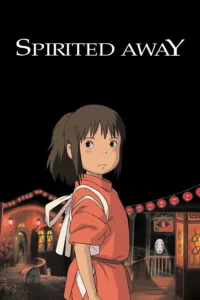
| 🎬 Title & Year | Spirited Away (2001) |
| 🎥 Director | Hayao Miyazaki |
| 👥 Starring | Rumi Hiiragi, Miyu Irino, Mari Natsuki, Takeshi Naitō, Yasuko Sawaguchi, Bunta Sugawara |
| 🕒 Genre / Runtime | Animation, Fantasy, Adventure • 125 minutes |
| 🔞 Rating | PG |
| ✝️ Core Faith Themes | Identity, Memory, Desire, Contentment, Courage, Spiritual Growth |
| 📖 Key Scripture | Genesis 1:27; Romans 12:2; Luke 12:15; Deuteronomy 8:2; Joshua 1:9 |
Table of Contents
This time, I want to reflect on an animated film I have always enjoyed: Spirited Away. Personally, No-Face is my favorite character, and I will explain why when we get to his section later.
On the surface, Spirited Away looks like the story of a young girl who enters a mysterious world and eventually finds her way home. But beneath that fantasy is a story about identity, desire, memory, fear, and growth. Chihiro is not strong or courageous from the beginning. She is anxious, uncomfortable with change, dependent on her parents, and clearly overwhelmed by the unfamiliar world around her.
Once her parents are turned into pigs and she realizes she cannot simply return home, Chihiro is forced into a situation where she can no longer depend entirely on others. From that point forward, she begins to change. She learns to work, builds relationships, helps people around her, protects the memory of her own name, and gradually finds the courage to make her own decisions.
What interests me most about the Spirited Away biblical themes is not simply that Chihiro grows, but that she grows without losing herself. The strange world gives her a new name, imposes new rules, and surrounds her with fear and temptation. Yet she does not become someone completely different. Instead, the experience helps her understand more clearly who she already is.
That leads me to five questions: Who am I when everything familiar disappears? What does it mean to lose my name? What happens when I try to fill emptiness with more and more? Why can remembering who we are bring freedom? And what does real growth actually look like?
In some ways, Chihiro’s journey reminds me of Moses in The Prince of Egypt. Moses had grown up in Pharaoh’s palace as a prince, surrounded by privilege and familiarity. Then, after killing an Egyptian and fleeing into the wilderness, everything he had known about his life and identity was suddenly disrupted. His years in Midian became a period of distance from the world he had known, and at the burning bush he was confronted by God with both his calling and the person he was being asked to become. When he eventually returned to Egypt to lead the Israelites out of slavery, he was no longer the same man who had fled.
So, with that in mind, let us enter this strange world with Chihiro and one of its most unsettling yet strangely lovable characters, No-Face.
1. Chihiro in a World That No Longer Feels Like Home
At the beginning of the story, Chihiro feels like an ordinary child. She does not want to move, she depends heavily on her parents, and unfamiliar surroundings make her nervous. That is part of what makes her feel so believable. She is not introduced as a fearless hero. She is a frightened child who learns to move forward one step at a time.
Moses comes to mind again here. At the burning bush, even after God tells him to return to Egypt and lead His people out, Moses repeatedly hesitates and makes excuses. At times, his resistance feels almost frustratingly human. That is one reason I relate to him. Fear and stubbornness can make us resist even the direction we know we should take.
Chihiro faces a similar kind of disruption in a very different story. Once her parents become pigs, everything familiar disappears at once: family, home, school, friends, and the world she understands. She is left in a place where she does not even know what she is capable of doing.
And yet that is exactly where her growth begins.
She learns that she must work in order to survive, begins forming relationships with people and creatures she once feared, and gradually becomes capable of acting even when she is still afraid. What matters is not that fear suddenly disappears. What matters is that she begins doing what needs to be done despite it.
That feels close to the heart of courage. Courage is not necessarily the absence of fear. Sometimes it is simply choosing to move in the right direction while fear is still present.
Our lives can change in similar ways. A new school, a new job, a move, a broken relationship, or an unexpected crisis can remove the environment that once made us feel secure. In those moments, even our sense of identity can begin to feel unstable.
But Chihiro’s story suggests that our surroundings do not ultimately define us. Sometimes who we are becomes clearest when the familiar disappears and we are forced to decide how we will respond. We can see a similar pattern in Moses, and also in Joseph’s story in Joseph: King of Dreams, when he is sold by his brothers and taken far from everything he knows.
So Chihiro leaves me with this question: If everything I depend on disappears, will I still know who I am?
2. When a Name Is Taken Away
One of the most important moments in the film comes when Chihiro begins working at Yubaba’s bathhouse and her name is taken from her.
Yubaba removes part of Chihiro’s name and begins calling her “Sen.” Haku warns her not to forget her real name, because if she does, she may lose the ability to return to the world she came from.
That idea carries a great deal of meaning.
A name is more than a label. It is tied to who we are, where we came from, and the life we have lived. So when Chihiro’s name is taken away, it feels like more than a change in what people call her. It represents the gradual loss of identity.
If she lives as “Sen” long enough, she may eventually forget that she was ever Chihiro. And once she forgets who she is, she may become permanently trapped in a world that has renamed her.
This immediately reminds me of Squid Game, which I recently wrote about. In that series, the participants are reduced to numbers instead of being known primarily by their names. I wrote there about how easily human dignity can disappear when people are treated as 456, 001, or 067 instead of as individuals with histories, relationships, and names. Spirited Away approaches the same question from a different direction. Chihiro is not reduced to a number, but she is still given an identity that belongs to the system controlling her.
We can lose ourselves in similar ways. Other people’s opinions can begin to define us. A job title, income, grades, success, failure, appearance, or social status can slowly become the name we live under. If someone calls us a failure often enough, we may begin to believe that failure is who we are. If society treats someone as useless, that person may eventually begin to see themselves the same way.
Scripture places human identity somewhere deeper. We are created in the image of God, and our value is not determined by whatever label the world gives us.
That is why Chihiro’s struggle to remember her name raises such an important question: No matter what the world calls me, do I still remember who I am before God?
The world can give us countless names: successful, unsuccessful, wealthy, poor, admired, forgotten, useful, useless. But if those labels become our deepest identity, we may eventually lose ourselves. Thinking back to the way Gi-hun and Il-nam are known inside Squid Game makes this connection even clearer.
3. No-Face and the Hunger That More Cannot Satisfy
Now we come to the character I mentioned at the beginning: No-Face, my favorite character in Spirited Away. He is strange, quiet, lonely, and difficult to understand. But once he enters the bathhouse, he begins absorbing the greed and desires of the people around him, and his behavior changes dramatically.
The workers gather around him when they see the gold he can produce. They flatter him because they want more. No-Face responds by eating more, consuming more, and growing larger. Yet the more he receives, the less satisfied he becomes. Instead of becoming peaceful, he becomes increasingly anxious, violent, and desperate for even more.
No-Face makes me think about the relationship between emptiness and desire. When something inside us feels empty, we may try to fill it with money, food, shopping, recognition, achievement, relationships, or attention. At first, those things can genuinely feel satisfying.
But if the emptiness itself is never understood, constantly adding more may only make the hunger stronger. Scripture’s warnings about greed are not simply about owning too much. Greed also involves the inability to be content and the belief that the next thing will finally be enough.
No-Face’s relationship with Chihiro is especially revealing because she does not want what everyone else wants from him. The workers want his gold. Chihiro does not. He can purchase their attention, but he cannot purchase hers.
And again, Squid Game offers an interesting comparison. Gi-hun eventually receives an almost unimaginable amount of money. But does winning that money make him happy? Anyone who has watched the season knows that it does not.
That leaves us with a question worth sitting with: What am I using to fill the empty places in my heart?
Will having more actually satisfy me, or do I need to first understand what that emptiness is asking for? When No-Face finally leaves the bathhouse and enters a quieter environment, he gradually returns to a calmer state. Sometimes the answer is not more consumption, but distance from the environment that keeps intensifying our desires.
4. Haku: Freedom Begins With Remembering
Haku is another character many viewers love, and interestingly, he has also lost his name. He works under Yubaba but no longer remembers where he came from or what his true name is.
Then Chihiro remembers something from her childhood. She recalls falling into a river and being carried safely to shore. She realizes that the river was Haku and that his true identity is connected to the Kohaku River.
In that moment, Haku remembers his name.
I find this scene beautiful because Haku’s freedom does not begin with greater power or with defeating Yubaba. It begins with remembering who he is.
We can lose that kind of memory too. Repeated failure can make us forget the person we once hoped to become. Other people’s expectations can become so loud that we lose sight of what we actually value. We can spend years trying to become what others want and eventually forget what mattered to us in the first place.
The same thing can happen spiritually. We may believe we know who God is and who we are before Him, yet the pressures of everyday life, fear, ambition, and desire can make us forget what we once knew clearly.
That is one reason Scripture so often calls God’s people to remember. Remember what God has done. Remember where He has led you. Remember who you belong to.
Forgetting can make us vulnerable to becoming controlled by other things. Remembering can help restore freedom.
That is what makes Haku’s recovered name so important. His name reconnects him with his past and with the truth of where he came from. He begins to recover the identity that had been buried beneath Yubaba’s control.
So this scene makes me ask: What have I forgotten while trying to keep up with life?
Do I remember where I came from, how God has led me, and the kind of person I once hoped to become?
Comparative Analysis: Chihiro, Haku, and No-Face
| Character | What Is Lost or Threatened | What Brings Change | Spiritual Question |
|---|---|---|---|
| Chihiro | Her name, security, and sense of identity | Remembering who she is while learning to act courageously | Can I grow without allowing the world to redefine me? |
| Haku | His true name and memory of where he came from | Chihiro remembers his name and reconnects him with his past | What have I forgotten about who I am and where I belong? |
| No-Face | His peace as he absorbs the greed and desires around him | Leaving the environment that keeps feeding endless consumption | What am I trying to use to fill the empty places in me? |
5. The Road Home and the Person Chihiro Has Become
Chihiro eventually returns to the human world with her parents, but the girl who comes back through the tunnel is not exactly the same girl who first walked into it.
At the beginning, she fears unfamiliar places and depends heavily on her parents. By the end, she can help others, make difficult decisions in dangerous situations, and act courageously for people she cares about.
Yet her growth does not require her to become someone completely different. In fact, the opposite seems true. By moving through this strange world, she becomes more certain of who she is.
That is what real growth often looks like.
We often imagine growth as becoming stronger, more successful, more knowledgeable, or more capable. But another form of growth is learning not to lose ourselves when the world keeps trying to shape us into something else. Chihiro has to live under the name “Sen,” but she never completely forgets that she is Chihiro.
She refuses No-Face’s gold. She does not use Haku for her own benefit. She gradually learns to recognize what matters and what does not. And in the final test, when Yubaba asks her to identify her parents among a group of pigs, Chihiro is able to recognize that none of them are her parents. The frightened child from the beginning has become someone capable of seeing clearly and trusting her own judgment.
Faith may grow in a similar way.
We live in a world that constantly influences us. Money, achievement, relationships, other people’s opinions, fear, and desire all try to give us new names. Growth does not require avoiding all of those influences. It may mean moving through them while becoming more certain of who we are before God.
That is why the ending of Spirited Away feels like more than simply returning home. Chihiro returns to ordinary life without having lost herself. She is not exactly who she was at the beginning, but neither has she become someone else entirely. In a sense, she returns more fully herself.
Perhaps our faith and our lives should grow in the same direction: not by accepting every name the world gives us, but by becoming more mature while remembering who we are before God. Not by becoming people who possess more, but people who know what is actually worth wanting. Not by becoming fearless, but by learning to move in the right direction even when fear remains. And not by forgetting where we came from, but by remembering where we belong.
Spirited Away takes place in a fantastical world, yet it leaves us with a very real question: When the world tries to give me a new name, will I still remember who I am?
Perhaps growth does not begin with gaining more. Perhaps it begins with remembering the name we were in danger of forgetting.
Key Takeaways & Faith Insights
- Courage Does Not Require the Absence of Fear: Chihiro grows not because fear disappears, but because she learns to move forward while fear is still present. Joshua 1:9
- The World Does Not Get the Final Word on Who We Are: Chihiro is renamed “Sen,” but she must remember the identity that existed before the system tried to redefine her. Our deepest worth is rooted not in labels, status, success, or failure, but in the dignity God gives us. Genesis 1:27
- More Does Not Always Fill What Is Empty: No-Face consumes more and more yet becomes increasingly restless. Desire becomes dangerous when we keep expecting the next possession, achievement, or source of attention to finally make us whole. Luke 12:15
- Remembering Can Restore What We Have Forgotten: Haku begins recovering his freedom when his true name and past are remembered. Scripture repeatedly calls God’s people to remember who God is, what He has done, and where He has led them. Deuteronomy 8:2
- Real Growth Does Not Require Losing Yourself: Chihiro returns home more courageous and mature, yet she has not surrendered her deepest identity to the world around her. Spiritual growth can mean becoming more mature while becoming more certain of who we are before God. Romans 12:2
“Once you do something, you never forget. Even if you can’t remember.”
Zeniba
Explore More Screen Devotions:
- 🎬 Movies: Explore Other Faith-Based Film Reflections
- 🌍 Documentaries: Biblical Perspectives on Real-World Issues
- 📺 TV Series: Faith Reflections Through Episodic Storytelling
Scripture taken from the Holy Bible, NEW INTERNATIONAL VERSION®, NIV® Copyright © 1973, 1978, 1984, 2011 by Biblica, Inc.® Used by permission. All rights reserved worldwide.