Cannon Fodder: What Happens When a System Becomes Our God?
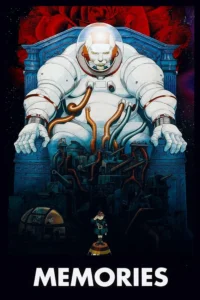
| 🎬 Title & Year | Cannon Fodder (1995) |
| 🎥 Director | Katsuhiro Otomo |
| 👥 Starring | Yu Hayashi, Keaton Yamada, Keiko Yamamoto, Nobuaki Fukuda |
| 🕒 Genre / Runtime | Animation, Science Fiction, Dystopian Drama, War • 22 minutes |
| 🔞 Rating | PG-13 |
| ✝️ Core Faith Themes | Idolatry, Discernment, Obedience, Responsibility, Generational Influence, Purpose |
| 📖 Key Scripture | Matthew 6:24; Romans 12:2; Acts 5:29; Deuteronomy 6:6–7; Matthew 22:37–39 |
Table of Contents
This time, I want to talk about Cannon Fodder, one of the animated segments in the anthology film Memories. It is a very short work, yet within that brief runtime it raises remarkably heavy questions. As I watched it, I found myself thinking that it speaks with unusual clarity to the age we are living in. From beginning to end, the entire city is organized around war. People build cannons, transport shells, load them, and fire them. Children are educated in subjects related to artillery, while adults repeat the same assigned tasks every day. The whole city functions like one enormous war machine.
And yet something feels deeply wrong. The cannons keep firing, but we barely see who the city is actually fighting. Where is the enemy? Why are they at war? How long has this conflict even lasted? None of those questions seem to matter anymore. War has become the organizing purpose of life itself, and the people no longer appear interested in examining that purpose.
That is what I found most disturbing. More than the violence, what unsettled me was how normal everything feels to the people living there. No one seems deeply troubled by what they are doing. No one stops long enough to ask, “Why are we doing this?”
For me, the Cannon Fodder biblical themes become especially powerful through four questions: What happens when a system becomes our purpose? When does obedience stop being a virtue and become dangerous? How are distorted values passed from one generation to the next? And what are we actually living for?
1. A City That Has Forgotten Why It Fights
This city exists for war. Every morning, people report to their assigned positions, prepare the cannons, receive orders, and fire shells. Everything is structured, efficient, and tightly organized. On the surface, everyone appears to be fulfilling their responsibilities faithfully. The deeper problem is that almost no one asks what those responsibilities are ultimately for. Who are they firing at? Why are they fighting? Does the enemy even truly exist?
Questions like these barely seem to exist within the city.
Watching this made me think about what happens when a system becomes more important than the people living inside it. At first, people create systems to establish order, improve efficiency, and help communities function. But over time, the relationship can reverse. Instead of people using the system, the system begins using the people.
What makes this especially unsettling is that people may still believe they are living freely even while their choices are being shaped by forces they rarely examine.
In Scripture, idolatry is not limited to statues made of wood or stone. Anything that takes a place above God and begins to rule our thoughts, decisions, and priorities can become an idol.
That means we may have our own versions of the “cannon.” It could be money, work, success, an organization, a nation, an ideology, or even the community we belong to. At first, it may look like something we are using. Eventually, however, it can become the center around which our entire life revolves.
So this city makes me ask: What am I living for right now? Is that purpose something I truly chose, or am I simply following it because everyone around me is doing the same thing?
And does social media sometimes make that kind of reflection even harder? Does it capture our attention so completely that we rarely stop long enough to examine what is shaping our thoughts?
That is one reason Cannon Fodder immediately reminded me of the documentary The Social Dilemma.
2. The Father: Obedience Without Discernment
The father in this story is extremely faithful to his role. He does not complain. He follows instructions, performs his assigned work, and maintains his place within the machinery of war. From the outside, he could easily appear responsible and disciplined.
But this is where The Social Dilemma comes to mind again. Are we sometimes trapped inside social media in a similar way? Instead of living according to carefully considered judgments, are we being pulled around by algorithms, reacting to whatever is placed in front of us without taking enough time to ask what is true, who the supposed “enemy” really is, or whether we even understand the situation? We may simply move with the crowd, much like the citizens of Cannon Fodder who remain busy preparing and firing weapons without really knowing what lies beyond the system they serve.
That is why the father makes me think about the difference between obedience and discernment. We often think of obedience as something good, and Scripture certainly places great importance on obedience to God. But obeying every command is not automatically righteous. If we never ask who is giving the order, what the order is for, or whether it is morally right, obedience itself can become dangerous.
The father performs his role well, but he never seems to examine what that role means. “Why am I doing this?” “Is what I am doing actually right?” “Who is this command really serving?” When questions like these disappear, obedience can stop being a virtue and become a way of avoiding responsibility.
“I was only doing what I was told.” History has heard some version of that sentence far too many times. But God did not give human beings only the ability to follow commands. He also gave us the ability to think, judge, and discern. Biblical faith is not the suspension of thought. It is deeply connected to learning how to recognize what is good and what is pleasing to God.
So the father leaves me with this question: Am I obeying, or have I simply stopped thinking? And behind that is an even harder question: if my workplace, organization, society, or community begins moving in the wrong direction, can I really say, “I am just doing my part”? I think that question matters enormously.
3. The Child Who Inherits the Cannon
The most frightening character in Cannon Fodder may actually be the child. Not because he is evil, but because he is innocent. He watches his father, observes the city around him, and dreams of one day becoming someone who fires the cannons himself. To him, that future feels completely normal because it is the only world he has ever known.
This makes me think about how sinful patterns and distorted values can pass from one generation to the next. Children do not learn only from what their parents tell them. They learn by watching how their parents actually live. If parents treat money as the most important thing in life, children may learn that money deserves first place. If parents constantly speak with hatred toward others, children may absorb hatred as a normal language. If parents care only about success, children may begin to believe that achievement determines human worth.
And all of this can be passed down without anyone ever directly saying, “You must believe this.” Daily life itself can become a kind of education.
I think about my own beloved twins here as well. Every action I take, and even the words my wife and I use when we talk with each other, may be entering their minds more deeply than I realize. They are learning from us even when we are not intentionally teaching them.
That is exactly why the child wanting to become an artilleryman is so disturbing. He never chose the war. He has never even met the enemy. Yet he has already accepted war as his future.
Scripture also shows that the consequences of sin do not always remain with one individual. One person’s choices can affect a family, a community, and even the generation that follows. That makes the responsibility of parents and adults especially serious. What we present as “normal” may matter even more than what we explicitly teach.
So this child leaves me with a difficult question: What is the way I live teaching the next generation to accept as normal?
4. When the Cannon Becomes the Meaning of Life
The cannon in this film is not merely a weapon. It is the center of the entire city. People’s jobs revolve around it, education revolves around it, and even civic pride is tied to it. The cannon has become the city’s identity. That is why I think it may be the most important symbol in the entire story. If you remove it, the city seems to lose its reason for existing.
So what about us? Is there something in my life that, if it disappeared, would make me feel as though I no longer knew who I was? My job? Money? Success? Reputation? My children? My country? My church? Even my own convictions?
All of these things can matter deeply. But there is a difference between what is important and what is ultimate. In Christian faith, the ultimate purpose of human life is not found in any worldly system or achievement. The center is to love God, love our neighbor, and live faithfully with the life God has given us.
But when something else quietly takes that place, we can begin to resemble the city in Cannon Fodder. We wake up, go to work, earn money, accomplish something, return home, and repeat the cycle. There is nothing automatically wrong with any of those things. But at some point, we may still need to ask: Why am I doing this?
If we cannot answer that question, perhaps we are already firing our own cannon every day.
What makes Cannon Fodder frightening is not simply that a massive war is taking place. It is that everything looks so ordinary. People wake up, go to work, and return home in the evening. Children go to school. Families eat together. The next morning, everyone begins again. On the surface, it looks like normal life, but at the center of that routine is a cannon that never stops firing.
Perhaps idols do not always appear before us in dramatic or obviously evil forms. Sometimes they enter our lives through habits so familiar that we no longer think to question them.
After watching this short film, one question stayed with me more than any other: What stands at the center of the life I repeat every day? And if that thing disappeared, would I still know who I am?
Perhaps faith is not simply about trying harder. Perhaps it is also about returning before God again and again to ask why we are living the way we are living. It is about recognizing the “cannon” we fire every day and stopping long enough to ask whether it has taken a place in our lives that belongs to God alone.
Maybe that is where the most important discernment in Cannon Fodder begins.
Key Takeaways & Faith Insights
- A System Can Become an Idol: Work, money, nation, ideology, or community can begin as something useful yet slowly become the center around which our entire life revolves. Matthew 6:24
- Obedience Must Not Replace Discernment: Following instructions does not remove moral responsibility. Christians are called to examine what is good rather than surrender judgment simply because an authority has spoken. Romans 12:2
- Children Learn What We Treat as Normal: The next generation learns not only from what adults teach explicitly but also from the priorities, habits, fears, and loyalties they observe every day. Deuteronomy 6:6–7
- We Need to Ask What Our Lives Are Ultimately For: Ordinary routines can become spiritually dangerous when we repeat them without examining what stands at their center. The highest purpose of life cannot belong to any system, achievement, or worldly identity. Matthew 22:37–39
“Dad, who are we fighting?”
“You’ll understand when you’re older.”The Boy & His Father
Explore More Screen Devotions:
- 🎬 Movies: Explore Other Faith-Based Film Reflections
- 🌍 Documentaries: Biblical Perspectives on Real-World Issues
- 📺 TV Series: Faith Reflections Through Episodic Storytelling
Scripture taken from the Holy Bible, NEW INTERNATIONAL VERSION®, NIV® Copyright © 1973, 1978, 1984, 2011 by Biblica, Inc.® Used by permission. All rights reserved worldwide.