
American Factory: When Efficiency Becomes the Measure of Human Worth
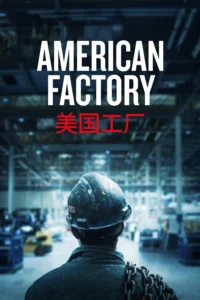
| 🎬 Title & Year | American Factory (2019) |
| 🎥 Director | Steven Bognar, Julia Reichert |
| 👥 Featuring | Fuyao Glass America workers, managers, and executives |
| 🕒 Genre / Runtime | Documentary • 110 minutes |
| 🔞 Rating | TV-14 |
| ✝️ Core Faith Themes | Human Dignity, Work, Technology, Stewardship, Responsibility, Identity |
| 📖 Key Scripture | Genesis 1:27; Ephesians 2:10; 1 Corinthians 10:23; Psalm 8:4–6 |
Table of Contents
In this American Factory Christian Review, I want to begin with a question that feels even more urgent today than it did when the documentary was released in 2019. As I write about this film in 2026, the gap of only a few years makes it feel surprisingly fresh. Back then, American Factory focused on a factory in the United States and explored the cultural tensions between a Chinese company and American workers, along with labor conditions, productivity, and unionization.
Watching it now, however, I cannot help but think about AI, automation, and the rapid expansion of machine-run factories. In just a few years, we have entered a world where technology is replacing more forms of human labor in very real ways.
Over the past few years, I have seen more and more reports in both the United States and South Korea about large companies expanding automated production. Repetitive tasks that were once performed by people are increasingly being handled by robots and automated systems. Machines do not need rest. As long as they have power and continue functioning properly, they can operate twenty-four hours a day. They do not need lunch breaks, sick leave, or time off because of family emergencies. From a company’s point of view, machines can seem almost ideal.
And that is exactly where an uncomfortable question begins to emerge:
In the age of AI, how far are we willing to go to protect human dignity?
Are Human Beings Measured by Productivity?
Throughout American Factory, tension repeatedly emerges between workers and management over productivity, efficiency, safety, wages, and working conditions. At first, some of these conflicts may appear to be mainly about differences between American labor culture and Chinese corporate culture. But as the documentary continues, a deeper question begins to surface: when a workplace becomes focused almost entirely on output, how easily do the people doing the work become valued mainly for what they can produce?
From the perspective of a factory, workers can begin to look like parts of a production line. What matters is how many units someone produces, how quickly the work is completed, and how costly mistakes become. But the film also shows why those measurements cannot tell the whole story. Questions about workplace safety and labor organization remind us that productivity is never merely a numerical issue. If producing more requires treating workers as increasingly expendable, efficiency is no longer simply an economic goal. It has become a moral question.
Genesis 1:27 grounds human dignity somewhere very different. Human beings are created in the image of God. Our worth therefore does not rise and fall with our output, health, age, income, or usefulness to an employer. Work matters, and doing our work well matters, but neither productivity nor profitability can measure the full value of a human person.
That distinction becomes even more important as automation expands. A machine may eventually perform a particular task faster, more accurately, or at a lower cost than a person. That may tell us something about the efficiency of the task. It does not tell us that the machine has become more valuable than the human being whose work it can perform.
The Humans Sitting in Their Chairs in WALL-E
Whenever I think about automation and convenience, I naturally think of WALL-E, a film I have already reflected on here at Screen Devotions. On the Axiom, machines perform nearly every ordinary task for human beings. What begins as convenience gradually becomes dependence. The people aboard the ship do not merely use technology; much of their daily life has been reshaped around what technology allows them to avoid doing for themselves.
That comparison comes to mind while watching American Factory because automation raises a similar question from a very different direction. Technology can remove dangerous or repetitive work, improve production, and make human life easier. Those are real benefits. The problem begins when efficiency itself becomes the standard by which every decision is judged, including decisions about people.
Technology is not evil simply because it makes life easier, and human labor does not become morally superior simply because it is harder. The more useful question is
what kind of human life our technology is helping us build.
Does it free people for meaningful work and healthier lives, or does it gradually encourage us to value convenience and output more than responsibility, relationships, and human dignity?
That is why the image from WALL-E still feels relevant to me. The danger is not simply that machines become more capable. It is that human beings may slowly reorganize their values around what machines can do most efficiently.
When Automation Eliminates Jobs, What Remains of the Human Person?
The scenes involving automation near the end of American Factory feel even more powerful when viewed today. American workers and Chinese workers spend much of the documentary comparing work habits, efficiency, and productivity, but the larger force in the background is mechanization. From the company’s perspective, both American and Chinese workers are still human labor costs. That is what I find most unsettling. While human beings compete with one another over who works harder or more efficiently, the system itself may be moving toward a future in which fewer human workers are needed at all. So what do we say to the person who loses a job because of automation?
“You are no longer useful”?
Losing a job is not only about losing income. For many people, work is deeply connected to identity. When someone asks, “What do you do?” we often answer by naming our profession. That is why unemployment, layoffs, and even retirement can shake a person’s sense of worth. But from a Christian perspective, we need to ask a deeper question:
If I lose my job, am I still a valuable person?
The answer is yes. Our work matters, but our work is not greater than our existence. Human beings are not machines created only to produce. Work is an important part of life, but it is not the final measure of human worth.
Technology Should Serve Human Life, Not Define Its Value
When people talk about AI, robotics, and automation, the conversation often moves toward one of two extremes. Technology is either treated as the solution to nearly every problem or as a threat that will inevitably destroy something essential about human life. I do not think American Factory requires either conclusion.
Technology is a tool created and used by human beings, which means the moral question does not end with what technology is capable of doing. We also have to ask what our choices are doing to the people affected by it. Automation may improve safety, remove repetitive tasks, and increase productivity. It may also eliminate jobs, shift economic power, and tempt companies to reduce workers to costs that can be removed from a spreadsheet.
Technological capability by itself cannot tell us which outcomes ought to matter most.
1 Corinthians 10:23 reminds us that something being permissible does not automatically make it beneficial. The verse is not specifically about technology, but the principle is useful here:
possibility is not the same thing as wisdom.
The fact that something can be automated does not settle whether it should be automated, how quickly that change should happen, or what responsibilities remain toward the people whose lives are affected.
This is where stewardship becomes important. Genesis 2:15 portrays humanity as entrusted with responsibility within creation. Greater technological power should therefore increase our sense of responsibility rather than diminish it. The question is not whether we should fear technology or worship it. The better question is whether we are using it in ways that serve human life without allowing efficiency to become the measure of human worth.
What the Church and Society Must Protect in the Age of AI
American Factory was already asking difficult questions about labor, productivity, automation, and human value when it was released in 2019. Those questions feel even more immediate now because automation is no longer merely part of the documentary’s closing warning. For many workers, technological change is becoming part of everyday economic life.
The church should not respond to that reality by pretending that employment does not matter. Losing a job can mean losing income, stability, routine, community, and a role that may have shaped someone’s identity for years. Telling a person simply to “work harder” can miss the real weight of that loss. At the same time, Christian faith gives us a reason to insist that losing a job does not mean losing one’s value as a human being.
Psalm 8:4–6 describes human beings as creatures whom God remembers and entrusts with responsibility. That dignity is not based on whether a person can outperform a machine. Businesses and societies still have to make difficult economic decisions, but efficiency should never make us forget that those decisions affect human lives rather than abstract units of labor.
Machines may work longer hours, repeat tasks more consistently, and perform certain jobs more efficiently than people. But human beings are not inferior machines. We form families and relationships, grieve, hope, worship, create, bear moral responsibility, and live lives whose meaning cannot be reduced to workplace productivity.
Human dignity is grounded not in efficiency, but in the fact that human beings are created in the image of God.
That is the question American Factory ultimately leaves with me. As technology becomes capable of doing more of the work human beings once performed, will we allow productivity to become our definition of value, or will technological progress force us to ask more clearly
what gives a human life value apart from economic usefulness?
Key Takeaways & Faith Insights
- Human Worth Is Greater Than Productivity: Human value is not determined by how quickly, efficiently, or profitably we work. Human dignity begins with the biblical claim that we are created in the image of God. Genesis 1:27
- Efficiency Is Not the Highest Good: A decision can increase productivity and still raise serious moral questions. Not everything that is possible or permissible is necessarily beneficial. 1 Corinthians 10:23
- Work Matters, but Work Is Not the Whole Person: Employment is important, but losing a job does not erase human dignity. Our value reaches deeper than our economic usefulness. Psalm 8:4–6
- Technology Requires Stewardship: Greater technological power brings greater responsibility. We should ask not only what technology can do, but how our use of it affects the people whose lives are shaped by those decisions. Genesis 2:15
“Everybody at every level will say that we really, really want to be safe. But safety doesn’t pay the bills.”
Fuyao Safety Director
Explore More Screen Devotions:
- 🎬 Movies: Explore Other Faith-Based Film Reflections
- 🎨 Animation: Spiritual Insights in Animated Films
- 📺 TV Series: Faith Reflections Through Episodic Storytelling
Scripture taken from the Holy Bible, NEW INTERNATIONAL VERSION®, NIV® Copyright © 1973, 1978, 1984, 2011 by Biblica, Inc.® Used by permission. All rights reserved worldwide.