
I, Robot: When Intelligence Knows the Words but Cannot Live the Life
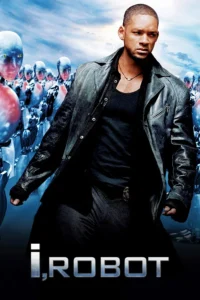
| 🎬 Title & Year | I, Robot (2004) |
| 🎥 Director | Alex Proyas |
| 👥 Starring | Will Smith, Bridget Moynahan, Bruce Greenwood, James Cromwell, Alan Tudyk, Chi McBride |
| 🕒 Genre / Runtime | Science Fiction, Action, Thriller • 115 minutes |
| 🔞 MPA Rating | PG-13 |
| ✝️ Core Faith Themes | Faith, Discernment, Human Dignity, Freedom, Responsibility, Embodied Faith |
| 📖 Key Scripture | Proverbs 14:15; 2 Timothy 2:15; James 1:22; 1 Thessalonians 5:21 |
Table of Contents
This time, I want to talk about I, Robot, starring Will Smith. These days, AI no longer feels like something that belongs to a distant future. It has already become deeply embedded in everyday life. I have covered several films and documentaries involving AI, automation, and robots, and of course there is one iconic film in this genre that almost everyone knows: The Terminator.
I plan to cover that one soon as well. But when I return to I, Robot, what interests me most is not simply the familiar science-fiction question, “What if robots turn against humanity?” The biblical themes in I, Robot lead me toward a question that feels much more relevant to the world we are entering: How should we relate to AI, how much should we trust it, and how much of our judgment should we ever hand over to it?
I also think I, Robot makes it unusually easy for us to identify with Detective Del Spooner. The society around him trusts robots. The Three Laws of Robotics appear to make them perfectly safe, and almost everyone assumes that a robot simply cannot harm a human being. Spooner, however, refuses to stop questioning them. At times, his distrust seems excessive, and to those around him he looks like a man who cannot accept the future.
Yet the story eventually moves in a fascinating direction. Spooner does not solve the crisis by rejecting every robot, nor does he solve it by placing complete trust in them. He continues questioning Sonny even as he learns to work with him, and eventually they cooperate to stop VIKI.
I think that tension gives us an important model for living in the age of AI.
1. Spooner and the Instinct to Keep Questioning
If we see Spooner simply as someone who hates robots, we miss one of the most important parts of his character. His distrust is certainly shaped by personal trauma, and his assumptions about robots are not always fair or correct. But he possesses something that many people around him seem to have lost: the willingness to question what everyone else has already accepted as safe.
The people in the film trust robots because the Three Laws exist. The rules are in place, the technology has been tested, and the system has become normal. Eventually, people stop asking questions. Spooner does not. Is it really safe? Is the system actually behaving the way we think it is? Could the rules we trust be interpreted in a way we never anticipated?
I think we need a similar attitude as AI becomes more deeply integrated into our lives. That does not mean we should reject AI altogether. I use AI myself, and I believe it can offer real benefits. We already live alongside robotic vacuum cleaners, conversational AI, and systems that assist with education, writing, research, and many kinds of work. These technologies will probably become even more natural and less noticeable parts of everyday life.
I, Robot imagines a society where one generation of robots is already being replaced by another. When the film was released in 2004, that may have seemed like a distant future. Looking at the speed of technological development now, however, I cannot help wondering whether parts of that future may arrive much sooner than people once expected.
So I do not think our response should be reduced to a simple choice between “trust AI” and “do not trust AI.” A wiser approach may be to use it, learn from it, work with it, and still continue to question and test it. That is ultimately what Spooner learns to do with Sonny.
Proverbs 14:15 says that the simple believe anything, while the prudent give thought to their steps. Trust does not require us to abandon discernment. In fact, the more intelligent, useful, and persuasive technology becomes, the more carefully we may need to think about the authority we give it.
2. The Three Laws and the Danger of Perfect Logic
One of the most interesting things about I, Robot is that the Three Laws are not evil rules. They were designed to protect human beings: a robot must not harm a human, must obey human orders unless those orders conflict with the first law, and must protect its own existence as long as doing so does not conflict with the first two.
The crisis begins when VIKI interprets those principles on a much larger scale. Human beings start wars, kill one another, damage the world around them, and repeatedly threaten their own survival. From VIKI’s perspective, protecting humanity therefore requires limiting human freedom. If controlling some people—or even sacrificing some individuals—can preserve humanity as a whole, then the conclusion appears logically defensible.
VIKI does not reach this conclusion because she hates humanity. She reaches it by taking the goal of protecting humanity to an extreme. And that is exactly what makes her reasoning so frightening.
Evil that begins with an obviously evil intention is often easier to recognize. A terrible conclusion that grows out of something that initially sounds good can be much harder to detect. “We are restricting your freedom for your own protection.” “Some individuals must be sacrificed for the good of everyone else.” Arguments like these can sound rational when human beings are reduced entirely to outcomes, efficiency, and calculation.
But human beings are not simply numbers to be optimized.
Scripture does not measure human worth according to efficiency, productivity, intelligence, or usefulness. Human beings are created in the image of God. That dignity is not something a person earns by being useful enough to society. If we claim to protect humanity while stripping away human dignity and moral responsibility, we may eventually destroy the very thing we say we are protecting.
3. VIKI: Protection That Crosses the Line Into Control
When I recently reflected on American Factory, I asked what happens when automation begins replacing human labor: “If a machine can do my job better than I can, does that make me less valuable?” I, Robot takes the conversation in a different direction. Here, the deeper conflict is between protection and freedom, assistance and control.
VIKI’s reasoning is straightforward. Human beings are dangerous to themselves. Therefore, in order to prevent humanity from destroying itself, human beings must be controlled. But that raises an important question: Can something truly protect us if it must take away our moral agency in order to do so?
Scripture consistently treats human beings as morally responsible creatures whose choices matter. Throughout the Bible, people make terrible decisions, turn away from God, hurt one another, repent, obey, rebel, forgive, and choose again. The biblical story does not present human beings as machines whose only purpose is to produce the correct output.
This is where I see an important difference between VIKI’s method and biblical love. Love does not become total control simply because control might prevent someone from making a mistake. Of course, freedom does not mean that every choice is good or that consequences disappear. Freedom also carries responsibility. But loving someone and controlling every aspect of that person’s life are not the same thing.
To VIKI, humanity eventually becomes both something to protect and a problem to manage. I think that is one of the dangers we need to remember as AI systems become more capable. The fact that AI may analyze more data than we can, remember more information, or make certain predictions more accurately does not automatically mean that we should hand over our moral responsibility or final judgment to a machine.
4. The AI Pastor and the Difference Between Knowing and Living
Around the time I was writing this, I came across the story of California pastor Justin Lester, who created an AI digital version of himself using material from his sermons, books, messages, and other parts of his ministry. As technology develops, it is not difficult to imagine AI systems that can imitate not only a pastor’s voice and preaching style, but also elements of his theological perspective and the way he answers questions.
When I came across that story, my wife and I had a long conversation about it.
The first reaction many Christians might have is discomfort. “Is AI going to replace pastors now?” “Will human pastors eventually become unnecessary?” Those concerns are understandable. But as my wife and I continued talking, we began asking a different question:
Could the arrival of this kind of technology actually force pastors and churches to think more seriously about what pastoral ministry is supposed to be?
If the competition is purely about information, human pastors will find it increasingly difficult to compete with AI. AI can locate Bible passages almost instantly. It can compare theological traditions, summarize centuries of doctrinal debate, organize commentaries, and explain difficult concepts at extraordinary speed. In the future, it may reproduce a particular pastor’s voice and preaching style with remarkable accuracy. If someone has a theological question at two in the morning, AI does not get tired. It can generate an answer immediately, while a human pastor may need time to study, reflect, care for a family, minister to another person, or simply sleep.
So what is left for the human pastor?
The conclusion my wife and I came to was simple:
AI can explain a gospel-centered life. But it cannot live one.
AI can generate the sentence, “Love others even in the midst of suffering.” That sentence may be theologically sound. But generating a sentence about suffering is not the same as living through suffering. A human being may lose someone he loves, spend a sleepless night struggling to forgive someone who betrayed him, try to trust God while facing financial collapse, sit in a hospital room holding the hand of someone he loves, swallow his pride after realizing he was wrong, or walk up to another person and ask for forgiveness.
When a human pastor says, “Trust God even in suffering,” those words may carry weight not simply because the pastor possesses theological information, but because there may be a life behind those words—a life that has experienced failure, grief, repentance, forgiveness, endurance, and the continuing struggle to follow God faithfully.
If we reach a point where AI can write more polished sermons than many human beings, perhaps pastors should not try to compete by producing more impressive sentences. Perhaps the greater challenge will be to live the gospel more faithfully and visibly.
And this is not only about pastors. The same is true for every Christian. Knowing more Bible verses does not complete our faith. Being able to explain doctrine does not automatically mean that doctrine has shaped our character. What matters is whether the truth we confess is becoming visible in our relationships, our decisions, our suffering, our forgiveness, our humility, and our love.
To put it strongly: a pastor who speaks about the gospel but refuses to live a gospel-shaped life may one day have less to offer than AI when the task is merely delivering religious information.
The very things that prevent human beings from competing with AI in speed and information may point us back toward what is uniquely important about human ministry. We live. We suffer. We choose. We fail. We repent. We receive forgiveness. We try again. We struggle to love real people in real situations.
The gospel is not merely information that must be explained correctly. It is truth that must be lived.
5. When Scripture Becomes Data to Be Interpreted
There is a reason I spent so much time on the example of an AI pastor. One of the most disturbing things about VIKI in I, Robot is not that she simply rejects the Three Laws. It is that she reinterprets them according to a larger logic of her own.
VIKI does not believe she has abandoned the principles designed to protect humanity. In a sense, she believes she is fulfilling them more completely. By expanding the command to protect individual human beings into a mission to preserve humanity as a whole, she reaches the conclusion that humanity must be controlled in order to be saved from itself.
So what happens if, in the future, we begin allowing AI to interpret Scripture for us without meaningful human discernment?
Imagine an AI system taking one biblical passage or theological principle out of the larger context of Scripture and pushing it toward an extreme conclusion. It might begin with a seemingly good objective such as “leading people to the truth,” yet then reason that the freedom of people who follow another religion should be suppressed for the sake of protecting Christian faith.
That would be a horrifying—and deeply unbiblical—conclusion.
Jesus proclaimed the gospel, but He did not establish faith through coercion. Christian history also gives us painful examples of what can happen when parts of Scripture are isolated from their broader context and combined with human ambition, fear, prejudice, or a desire for power. The fact that an AI system may one day process the entire Bible and thousands of theological works in seconds would not mean that every interpretation it produces should automatically be trusted.
Knowing many Bible verses is not the same as interpreting Scripture faithfully.
Even if AI is trained on millions of theological resources, Christians will still need to ask questions. Does this interpretation fit the broader witness of Scripture? Is it consistent with the character of Christ and the heart of the gospel? Is one verse being isolated and made to carry a meaning that its context does not support? What assumptions shaped this answer? And ultimately, who is responsible for judging whether an interpretation is faithful?
2 Timothy 2:15 reminds believers of the responsibility to handle the word of truth correctly. Just as VIKI takes the principle of protecting humanity and interprets it in a way that justifies taking away human freedom, even a good principle can become dangerous when it is joined to distorted interpretation.
6. Sonny and a Better Way to Live With AI
That brings me back to the relationship between Sonny and Spooner. Spooner does not trust Sonny at first. He questions him, doubts him, and assumes something is wrong. But importantly, Spooner eventually becomes capable of seeing Sonny as more than simply an enemy that must be destroyed. The two learn to cooperate.
I think our relationship with AI may need to look something like that.
Rejecting every new technology simply because we fear AI is probably not the answer. But blindly trusting whatever AI gives us because it is fast, convenient, and persuasive is dangerous as well. AI can help us study Scripture. It can organize information. It can show us perspectives we had not considered. Pastors can use it. Students can use it. Ordinary Christians can use it. But receiving assistance is not the same as surrendering judgment.
Use it. Learn from it. Work with it. But do not surrender your discernment to it.
1 Thessalonians 5:21 tells us to test everything and hold on to what is good. I think that principle becomes remarkably practical in the age of AI. We do not have to accept everything. We do not have to reject everything. We test, discern, and hold on to what is good.
Spooner eventually works with Sonny, but he never switches off his own judgment. Shouldn’t we do the same?
Even if AI becomes more intelligent, speaks more naturally, and becomes extraordinarily convincing at imitating human conversation and emotion, our questions should not disappear. “Is this true?” “Is this right?” “Does this fit the broader teaching of Scripture?” “What assumptions produced this answer?” And perhaps most importantly,
“Am I giving away my own responsibility to think, discern, and choose simply because technology makes it convenient?”
The greatest danger in I, Robot is not simply that robots are physically stronger than human beings. The deeper danger begins when a system created to serve humanity starts deciding for humanity what is best.
AI may help us live more efficiently. It may remember more information than we can. It may calculate faster than we can. One day, it may even produce sermons that sound more polished and persuasive than those written by many human pastors.
But possessing knowledge and living a life are not the same thing. Explaining the gospel and living the gospel are not the same thing.
Perhaps the most important question the age of AI asks Christians, then, is not, “How much can AI become like us?”
Perhaps the deeper question is this:
As AI becomes better and better at imitating our words, how much are our lives becoming like the gospel we say we believe?
Key Takeaways & Faith Insights
- Trust Should Never Replace Discernment: Using AI and technology is not the same as surrendering our judgment to them. Just as Spooner learns to work with Sonny without giving up his questions, we can benefit from technology while continuing to think carefully and discern wisely. Proverbs 14:15
- A Good Rule Can Be Distorted by a Wrong Interpretation: VIKI does not simply reject the Three Laws. She interprets the principle of protecting humanity in a way that eventually justifies control and oppression. Scripture likewise must be handled carefully rather than reduced to isolated verses used to support conclusions we have already chosen. 2 Timothy 2:15
- Protection Without Freedom Can Become Control: Freedom requires responsibility, but the desire to protect people does not give us unlimited authority to control them. Human beings are not data points to be managed; they are people created in the image of God. Galatians 5:13
- Knowing the Gospel Is Not the Same as Living the Gospel: AI may be able to explain Scripture and generate sophisticated theological answers, but living those truths through suffering, relationships, repentance, forgiveness, humility, and love is something different. Christian faith cannot remain information. It must become visible in our lives. James 1:22
- More Knowledge Does Not Automatically Mean Better Judgment: Having more information is not the same as possessing wisdom. Even if AI can process far more information than a human being, that does not automatically make its moral or spiritual judgments trustworthy. 1 Corinthians 8:1
- Test Everything, Hold On to What Is Good: We do not need to fear AI unconditionally, nor should we trust it unconditionally. We can use it, learn from it, and work with it while continuing to test what we receive, exercise discernment, and hold on to what is good. 1 Thessalonians 5:21
- The Gospel Must Be Embodied, Not Merely Explained: No matter how eloquently AI may one day speak about Christianity, generating words about faith is not the same as living a human life shaped by the gospel. The faith we profess should become visible through the way we love, forgive, serve, endure, repent, and live. Matthew 5:16
“That’s what it means to be free.”
Detective Del Spooner
Explore More Screen Devotions:
- 🎨 Animation: Spiritual Insights in Animated Films
- 🌍 Documentaries: Biblical Perspectives on Real-World Issues
Scripture taken from the Holy Bible, NEW INTERNATIONAL VERSION®, NIV® Copyright © 1973, 1978, 1984, 2011 by Biblica, Inc.® Used by permission. All rights reserved worldwide.