
Bird Box: Temptation, Faith, and the Wisdom to Look Away
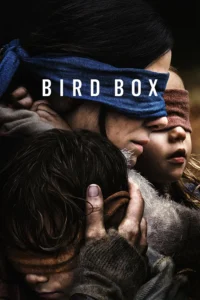
| 🎬 Title & Year | Bird Box (2018) |
| 🎥 Director | Susanne Bier |
| 👥 Starring | Sandra Bullock, Trevante Rhodes, John Malkovich, Sarah Paulson, Jacki Weaver |
| 🕒 Genre / Runtime | Post-Apocalyptic Horror, Thriller • 124 minutes |
| 🔞 MPA Rating | R |
| ✝️ Core Faith Themes | Temptation, Discernment, Human Weakness, Dependence on God, Hope |
| 📖 Key Scripture | Ephesians 6:12; 2 Timothy 2:22; Psalm 119:105; 1 Corinthians 10:12–13 |
Table of Contents
Bird Box left a surprisingly strong impression on me when I first watched it. The world in the film begins to collapse because of a mysterious presence that no one can see or fully understand. Anyone who looks directly at it becomes overwhelmed by something beyond their control and eventually takes their own life. The film never clearly reveals what the entity actually looks like. The drawings we see and the reactions of the characters suggest something dark, perhaps even demonic, but what makes the threat especially terrifying is that it remains invisible while still having the power to destroy human lives.
Watching Bird Box made me think about how different our world is from the one in the film and, at the same time, how strangely similar it can be. Our reality is obviously not a world where simply opening our eyes leads to death, but we also live surrounded by dangers that are not always visible. Greed, jealousy, pride, comparison, addiction, resentment, and hatred can begin quietly within the heart.
Words are invisible too, yet a careless sentence can stay in another person’s memory for years. Something I say without much thought may discourage someone more deeply than I ever realize. Scripture takes the power of the tongue seriously for a reason; James compares it to a small fire capable of setting a great forest ablaze. Something does not have to be visible to be real, and it does not have to look dangerous at first to eventually cause great harm. That is why one question stayed with me throughout the film:
if sin and temptation can remain unseen while staying close to us, how should we respond to them?
Just Because We Cannot See the Danger Does Not Mean It Is Not There
The characters in Bird Box never fully understand what is hunting them. They cannot look at it and survive long enough to explain what it is. Yet they know the danger is real. The wind moves strangely, voices begin to whisper, and the birds react when the presence draws near. Their eyes cannot safely confirm what is happening, but the signs around them make it clear that something is wrong. That reminded me of the Christian life. Sin rarely appears in front of us wearing a label that says, “This will destroy you.” More often, it enters quietly. Sometimes it looks ordinary, sometimes attractive, and sometimes almost harmless.
It may begin with a small comparison: “Why does that person have what I do not?” It may begin with a wound we replay so many times that resentment slowly hardens into hatred. Even the natural desire to be appreciated can become pride when recognition begins to determine our sense of worth. These changes usually do not happen all at once; they grow quietly.
Ephesians 6:12 reminds us that our struggle is not merely against flesh and blood. I am not suggesting that the creatures in Bird Box directly represent the spiritual forces described in Scripture—that would push the film too far into allegory. But the movie does remind me of an important truth: something does not have to be visible in order to be dangerous. Christian discernment therefore involves more than watching our outward behavior. We also have to pay attention to what is slowly taking root inside our hearts.
Sometimes the Wisest Way to Fight Temptation Is Simply to Run
When I was in college, and later while listening to sermons at church, I heard many teachings about sin and temptation. One practical lesson has stayed with me for years: we cannot assume that sheer willpower will always be enough. Because we are sinful and vulnerable human beings, there are situations in which confidence in our own strength can actually place us in greater danger. One pastor expressed the practical side of this very simply:
“Sometimes you just need to avoid it.”
That teaching came back to me while watching Bird Box. The characters do not defeat the mysterious presence by looking directly at it and proving that they are stronger. They do not remove their blindfolds to test their self-control or insist on understanding everything before they escape. If they want to survive, they have to refuse to look. We often approach temptation very differently.
We tell ourselves, “This much is fine,” “I can control it,” “I am not like those people,” or “I can get a little closer without falling.” Yet Scripture does not tell us to confront every temptation simply to prove how spiritually strong we are. 2 Timothy 2:22 tells us to flee youthful passions, and when Joseph was tempted by Potiphar’s wife, he did not stay in the room to demonstrate the strength of his willpower—he ran.
Running away is not always cowardice. Sometimes it is wisdom. We do not create boundaries because we are strong enough to stand beside temptation indefinitely; we create them because we understand that we can be weak. There are moments when refusing to look, refusing to listen, or refusing to remain in a certain situation is wiser than standing next to sin and trying to prove that we can handle it.
Once Your Eyes Are Covered, What Will You Hold On To?
What makes Bird Box especially interesting is that the story does not stop at the idea of closing our eyes. A blindfold may protect the characters from immediate danger, but once they cannot see, another problem appears: how do they know where to go? Malorie and the children have to rely on other ways of navigating. At one point, she uses a rope to stay connected to Boy and Girl while searching for supplies. Sound also becomes essential, and the birds serve as a warning when the invisible presence draws near.
Those details stood out to me because they show that avoiding danger is only half the problem. It matters what we refuse to look at, but it also matters what we hold on to and what voice we choose to follow. In the film, ropes, sounds, and birds help the characters move through a world where their eyes cannot safely guide them. In Christian life, Scripture, prayer, and faithful community can help guide us when our own instincts become unreliable. Sometimes we need another believer willing to tell us, “That direction is dangerous,” even when we think everything is fine. We need a standard more trustworthy than our own emotions and desires.
I am not suggesting that the rope, birds, or whistle directly symbolize God or the Holy Spirit. The value of the scene is not in forcing a one-to-one allegory onto the film, but in the question it raises: when I cannot fully trust my own judgment, what am I holding on to? We often assume that we see our lives clearly, yet human judgment is easily shaped by emotion, desire, fear, pride, and self-interest.
Sin can look beautiful. A dangerous road can feel like freedom. Something harmful can appear harmless simply because we want it. That is why Psalm 119:105 describes God’s Word as a lamp for our feet and a light for our path. Sometimes listening to God matters more than following whatever looks right in our own eyes.
“It Should Be Fine If I Only Look Once”
Another scene that stayed with me is Greg’s attempt to view the entity through a security camera. Looking directly outside is clearly dangerous, so he wonders whether seeing it indirectly through a screen might somehow make it safer. It does not. The distance created by the camera does not protect him from the danger. That scene made me think about the way we sometimes negotiate with temptation.
We may not completely remove our boundaries; instead, we move them little by little. “I am not actually doing anything. I am only looking. I will stop before it goes too far. I know myself. I will not become addicted.” The deeper problem may not be curiosity itself but the confidence that tells us,
“I am strong enough to stay close to this without letting it affect me.”
Greg did not need a safer camera. He needed not to look. We do not need to personally experience every danger before believing that it can harm us, just as we do not need to place our hand in a fire to understand that fire burns. People who understand their own weaknesses are often the people most willing to establish healthy boundaries. This is also why saying “we cannot defeat sin through our own strength” needs to be understood carefully.
It does not mean Christians are powerless to resist temptation or that we should surrender whenever sin appears. Scripture clearly calls believers to resist. What it challenges is the belief that human willpower alone is sufficient. 1 Corinthians 10:12–13 warns the person who thinks he stands to be careful not to fall, while also reminding us that God provides a way to endure temptation.
Recognizing weakness is not admitting defeat. It may be the first step toward fighting wisely.
The Moment Boy and Girl Receive Their Names
The ending of Bird Box also left a strong impression on me. For most of the film, Malorie does not call the two children by personal names. They are simply Boy and Girl. In a world where survival has become the highest priority, it almost seems as though she is afraid to become too emotionally attached to them.
Keeping them alive matters more than allowing herself to imagine a future with them. But after their long journey, they finally arrive at a safe community built around a school for the blind, and there Malorie gives the children their names: Boy becomes Tom, and Girl becomes Olympia. The film’s ending confirms that movement from mere survival toward relationship, belonging, and hope.
To me, that moment feels like much more than the simple revelation of names. They are no longer merely Boy and Girl—two children who must be kept alive. They are Tom and Olympia, children Malorie openly receives as her own. Earlier, Tom tells Malorie that merely surviving is not the same as living and that the children deserve dreams, love, and hope. The ending finally allows Malorie to move beyond survival alone and make room for those things.
There is also something deeply ironic about the place where they find safety. In the world of Bird Box, sight has become dangerous, yet a community centered around people who are blind becomes a refuge. I would not reduce that irony to a simplistic message such as “blindness equals faith.” That would neither respect the film nor make theological sense. But the contrast is still worth noticing:
seeing everything does not always make us wiser or safer. Sometimes wisdom includes knowing what not to look at.
That is the tension Bird Box leaves with me. Temptation whispers, “Just look once. Just experience it once. You will be fine. You can control it.” Christian wisdom sometimes answers by refusing the invitation altogether. But turning away is not the end of faith. After we turn away, we still need something to hold on to: God’s Word, prayer, wisdom, and faithful people who can help us hear clearly when our own judgment becomes unreliable.
Watching Bird Box reminded me again that I cannot completely conquer sin through my own strength. Recognizing that I am capable of falling is not the beginning of despair; it can be the beginning of dependence on God. When I believe I am strong enough on my own, I have little reason to ask for help. When I recognize my weakness, I begin to reach for grace.
So the question the film leaves with me is not simply whether I am strong enough to face temptation. It is this: in a world where unseen sin and temptation constantly surround us, will I stare directly at them and test my own strength, or will I sometimes turn my eyes away, hold on to what God has given me, and listen more carefully for His voice?
And as you go through today, are you listening carefully for the voice of God?
Key Takeaways & Faith Insights
- Not Every Danger Can Be Seen: Not every threat that affects our lives is visible. Sin, temptation, words, and emotional wounds may be difficult to see, but they can still damage our hearts and relationships. That is why spiritual discernment matters. Ephesians 6:12
- Sometimes the Wisest Response to Temptation Is to Flee: Keeping temptation close simply to test our willpower is not always courage. Recognizing our weakness and creating distance from sin can be one of the wisest and most practical ways to resist it. 2 Timothy 2:22
- When You Cannot Trust Your Sight, Hold On to What Guides You: Just as the characters in Bird Box depend on other ways of navigating when sight becomes dangerous, Christians should not depend only on feelings and desires. Scripture, prayer, and faithful community help us discern the direction we should take. Psalm 119:105
- Knowing Your Weakness Is Not Defeat: Admitting that human willpower alone cannot conquer sin is not surrender. Those who understand their weakness are more likely to depend on God and establish wise boundaries against temptation. 1 Corinthians 10:12–13
- Survival Is Not the Whole of Life: The naming of Tom and Olympia marks a movement beyond mere survival toward love, belonging, identity, and hope. Christian life is not only about avoiding what destroys us, but also about receiving the life God calls us to live. John 10:10
“Surviving is not living.”
Tom
Explore More Screen Devotions:
- 🎨 Animation: Spiritual Insights in Animated Films
- 🌍 Documentaries: Biblical Perspectives on Real-World Issues
Scripture taken from the Holy Bible, NEW INTERNATIONAL VERSION®, NIV® Copyright © 1973, 1978, 1984, 2011 by Biblica, Inc.® Used by permission. All rights reserved worldwide.