
Circle: Who Gets to Decide Which Life Matters More?
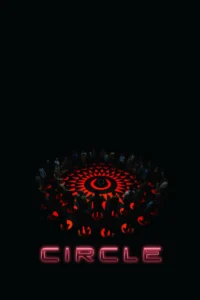
| 🎬 Title & Year | Circle (2015) |
| 🎥 Directors | Aaron Hann, Mario Miscione |
| 👥 Starring | Michael Nardelli, Allegra Masters, Molly Jackson, Julie Benz, Carter Jenkins, Mercy Malick |
| 🕒 Genre / Runtime | Science Fiction, Thriller, Mystery, Drama • 87 minutes |
| 🔞 Rating | Not Rated |
| ✝️ Core Faith Themes | Human Dignity, Judgment, Prejudice, Discernment, Sacrifice, Moral Responsibility, Survival |
| 📖 Key Scripture | Genesis 1:27; Matthew 7:1–5; James 2:1–4; Romans 12:2; Luke 10:33–37 |
Table of Contents
I have watched countless films, but it is rare to find one quite like Circle: visually stripped down, confined almost entirely to a single location, and yet filled with remarkably deep ideas. Many short films and minimalist productions are built around similarly limited settings, but Circle stands out because of how forcefully it delivers its message despite using so little on the surface.
The film begins in an extremely simple space. Fifty strangers wake up in a dark room, each standing on a marked spot in a circle. If they step away from their position, they die, and at regular intervals another person is killed. Before long, they discover something even more disturbing: they can vote to decide who dies next. In the end, the most frightening thing in the room is not the machine at its center. It is the way ordinary human beings begin placing value on one another’s lives in order to preserve their own.
Who has already lived longer? Who is younger? Who has children? Who contributes more to society? Who has made serious mistakes in the past? As time passes, the group reduces entire lives to a few pieces of information and uses those details to argue, in effect, “I deserve to live more than you do.” For me, the Circle biblical themes begin with this uncomfortable question: Can we really decide that one human life is worth more than another?
The film also reminded me, in a different way, of Squid Game and The Hunger Games, both of which I have written about before. Squid Game reduces its contestants to numbers, while The Hunger Games shows a government turning human life into both entertainment and a tool of control. But Circle goes one step further. This time, it is not only the system judging human worth. Ordinary people standing side by side begin evaluating one another and directly deciding who should die. The question therefore becomes much more personal: If I were standing inside that circle, what standard would I use to judge someone else?
1. The Moment Human Life Becomes a Ranking
Once the group understands how the voting works, one of the first things they do is create criteria. Some argue that the elderly should die first, while others say younger people deserve to live because they have more of their future ahead of them. Some insist that the pregnant woman and the child should be protected, while others argue that if every life is equal, no one should receive special priority. At some point, life itself stops being something inherently worthy of respect and becomes something to be compared.
Watching these scenes made me think about how easily we do something similar in real life. We may assign greater value to those who are wealthy, successful, young, healthy, highly educated, or responsible for supporting a family. By contrast, the lives of those who are old, sick, poor, or seen as unable to contribute much to society can begin to feel less important.
But in Scripture, human dignity does not begin with productivity. A person is not valuable because of how much they can accomplish or how many years they still have left to live. Human beings have dignity because they are created in the image of God. If that is true, then the moment we begin ranking lives according to someone’s job, age, health, wealth, or usefulness to society, we may already be measuring human worth by the wrong standard.
That is why Circle asks such an uncomfortable question: If one life can be given a higher score than another, who has the right to assign that score?
2. A Few Facts Become a Death Sentence
As the game continues, the group begins interrogating one another. What do you do for a living? Do you have a family? What have you done with your life? Have you committed serious wrongs? The problem is that these brief answers quickly become verdicts on the whole person. Based on only a few sentences, someone is labeled “good,” while someone else is treated as though they are expendable.
What makes this frightening is that it is not only a problem inside an extreme fictional situation. We also judge entire people based on very little information. One careless remark, one action, a person’s job, political opinion, or a short video online can be enough for us to conclude, “That is who they are.” But what we know may be only a tiny fragment of their story.
When Jesus speaks about judgment, the point is not that we should abandon discernment altogether. Rather, He warns against condemning others while refusing to examine ourselves. There are times when we must distinguish right from wrong, but we are not in a position to issue a final verdict on an entire human life as though we know the whole story.
In Circle, that judgment leads immediately to death. Real life is rarely that extreme, but our words and assumptions can still destroy a reputation, sever relationships, or push someone outside a community. So the film makes me ask: Before I judge someone, do I first consider how little I may actually know about them?
3. Fear Brings Hidden Prejudice to the Surface
As time passes, the group begins using race, sexual orientation, immigration status, occupation, age, and religion as reasons for their votes. Prejudices that may have remained hidden under normal circumstances quickly rise to the surface under the fear of death. Gradually, it becomes easier to search for reasons why someone should die than reasons why they should be allowed to live.
I think this is one of the most realistic parts of Circle. A person’s character can become more visible in a crisis than in a peaceful moment. It is easy to say that we respect everyone when nothing is at risk. But can we say the same thing when our position, money, safety, or survival feels threatened?
Fear easily divides people into “us” and “them.” Once we stop seeing someone as an individual and begin seeing them only as a category or label, empathy can disappear very quickly. I think this is also part of what makes biblical love of neighbor so difficult. It is much easier to love people who are similar to us than to recognize the image of God in someone we do not understand or may even find uncomfortable.
So the film does not simply stop at saying, “People have prejudices.” It asks a harder question: When I become afraid, how long do the values of love and dignity that I normally speak about remain intact?
4. The Safety of Hiding Behind the Majority
One of the most interesting aspects of Circle is that people die through voting. One dictator is not personally deciding who should live or die. The majority chooses. On the surface, that can almost look fair because everyone appears to have an equal vote.
But a majority decision does not automatically make something right. If ten people agree to sacrifice one person unjustly, that does not make the action just. I do not think the voting system in this film is necessarily meant as a criticism of democracy itself. Rather, it shows what can happen when individuals hide their responsibility inside the decision of a group. Saying, “I did not kill that person; everyone decided together,” does not erase personal responsibility.
This is where Cannon Fodder comes to mind again. In that story, people believe they are simply doing the job assigned to them. Even if the entire system is wrong, an individual can say, “I was only doing my part.” In Circle, people can hide behind the group in much the same way. But every vote is still a choice made by one person.
Faith does not allow us to use “everyone else is doing it” as an easy moral standard either. Just because an entire community moves in one direction does not mean that direction is automatically God’s will. Sometimes choosing what we believe is right, even when we are standing alone, is much harder than blending into the majority. So the film asks: Even when everyone else is making the same choice, can I still ask whether that choice is actually right?
5. A Stranger’s Life Against My Own
As the film continues, some people deliberately step away from their positions and choose death in order to give others more time. Later, as the argument grows stronger that the child and the pregnant woman should be protected, the question becomes even more direct. If someone is going to survive, someone else will eventually have to die.
This part reminded me of Katniss in The Hunger Games. The moment Prim’s name is called, Katniss risks her own life and steps forward in her sister’s place. Both films raise a similar question, but the circumstances are very different. Katniss has a clear personal relationship with the person she is protecting: her beloved younger sister. In Circle, most of the people barely know one another. That makes the question even harder: Would I be willing to sacrifice myself not for someone I love, but for someone I do not even know?
The love of neighbor that Jesus teaches is not limited to people we already like. In the parable of the Good Samaritan, the neighbor is not someone with an existing close relationship, but a person in need encountered along the road. That is why sacrificial love is far more demanding than emotion alone. It asks whether I can regard another person’s life as precious even when I have no personal reason to do so.
The situation in Circle is extreme, but the sacrifices we face in everyday life are usually not matters of life and death. They may involve giving up time, money, comfort, opportunities, or pride. But the underlying question points in the same direction: What am I willing to give up for the good of another person?
6. The Temptation to Play God
By the middle of the film, the group has gradually moved into a very strange position without fully realizing it. At first, they vote simply because they do not want to die. But as time passes, they begin making arguments about who deserves to live and who deserves to die. Eventually, they place themselves in the position of passing judgment over the lives of others.
This made me think about how easily human beings can try to stand in God’s place. We do not know the whole situation, we do not fully know another person’s heart, and we do not know what that individual may become in the future. Yet the people in the film use only a few pieces of information to make final decisions about someone else’s existence.
In Scripture, life ultimately belongs to God. I do not mean that every legal or ethical judgment in real life can therefore be reduced to a simple answer. Rather, I think it means we should remember that human beings have clear limits. No matter how much I think I know, I do not possess a complete view of another person’s life.
Perhaps the real experiment in Circle is not simply about seeing who survives until the end. Maybe it is about seeing what human beings will do when they are given the power to decide life and death.
7. Eric Survives, but Can We Call It a Victory?
The ending of the film turns many of the questions raised earlier upside down. Among the final people remaining, Eric has consistently supported protecting the child and the pregnant woman, and on the surface he appears to be arguing from a relatively moral position. But in the final moments, after the child sacrifices herself, he acts as though he intends to die together with the pregnant woman while secretly voting against her at the last second. After she dies, he discovers that the unborn child is being counted as a separate life. In the end, Eric eliminates that final life as well and survives alone.
What makes this ending so powerful is that Eric does not begin as an obvious villain. For most of the film, he appears to be on the side of protecting the child and the pregnant woman. That makes his final choice even more disturbing. It forces us to reconsider whether he truly wanted to protect them, or whether he was using that moral position as part of his strategy for survival.
This creates a powerful contrast with The Hunger Games. In the final moments, Katniss and Peeta refuse the system’s demand that they kill each other in order to survive. Eric, on the other hand, deceives others and uses the system’s rules as effectively as possible in order to survive. Both stories end with survival at stake, but the choices could not be more different.
That is why I find it difficult to simply say, “Eric won.” He survived. But does survival alone equal victory? This connects again with the question Peeta raises in The Hunger Games. If the kind of person I become in the process of surviving matters, then survival itself cannot be the final measure of success.
When Eric finally emerges from the room, he discovers that he is not the only survivor. There are others from separate groups, and many of them appear to be children and pregnant women. The film does not offer a definitive explanation for this scene, but it forces us to reconsider everything that came before it. In other circles, perhaps people sacrificed themselves so that those they believed were weaker or more vulnerable could survive. In Eric’s circle, by contrast, calculation and deception survived until the very end. Perhaps what the experiment reveals is not simply that “human beings are selfish,” but that even under the same extreme conditions, people can make radically different choices.
Circle begins like a game asking, “Who will survive?” But by the end, it leaves us with very different questions: Do we have the right to decide who deserves to live? By what standard do we measure another person’s worth? And if I abandon love, conscience, and human dignity in order to survive, what does that survival actually mean?
I think this film connects with Squid Game, The Hunger Games, and Cannon Fodder through one larger question. Systems can reduce people to numbers, roles, and competitors. But when the decisive moment arrives, the heart of each individual is revealed. And in that moment, faith asks us: when the world begins calculating the value of human life,
can I still see the image of God in the person standing in front of me?
Key Takeaways & Faith Insights
- Human Worth Cannot Be Measured by Usefulness: Age, health, wealth, productivity, education, and social contribution cannot determine the value of a human life. Our dignity begins with being created in the image of God. Genesis 1:27
- We Rarely Know Enough to Judge an Entire Person: A fragment of someone’s story is not the whole story. Discernment is necessary, but condemning a person while ignoring our own limits is something different. Matthew 7:1–5
- Fear Can Expose the Prejudices We Thought We Had Overcome: Crisis can reveal how quickly labels replace compassion. Biblical love of neighbor calls us to recognize dignity even in people unlike ourselves. James 2:1–4
- A Majority Decision Is Not Automatically a Righteous Decision: Personal responsibility does not disappear simply because everyone around us makes the same choice. Romans 12:2
- Love of Neighbor Can Cost Us Something: Sacrifice becomes especially difficult when the person who benefits is not family or someone we already love. Jesus expands the meaning of neighbor beyond our existing relationships. Luke 10:33–37
- Human Knowledge Has Limits: We do not know another person’s complete heart, future, or value. Humility matters when we are tempted to place ourselves in the position of issuing final judgments over human lives. 1 Samuel 16:7
- Survival Alone Is Not Victory: Eric survives, but the ending forces us to ask what kind of person survives. Preserving our life while abandoning love, conscience, and human dignity may leave us with something far less than true victory. Mark 8:36
“We’re trying to decide who deserves to live, right?”
The Rich Man
Explore More Screen Devotions:
- 🎨 Animation: Spiritual Insights in Animated Films
- 🌍 Documentaries: Biblical Perspectives on Real-World Issues
- 📺 TV Series: Faith Reflections Through Episodic Storytelling
Scripture taken from the Holy Bible, NEW INTERNATIONAL VERSION®, NIV® Copyright © 1973, 1978, 1984, 2011 by Biblica, Inc.® Used by permission. All rights reserved worldwide.