
Gattaca: Can DNA Decide the Limits of a Human Life?
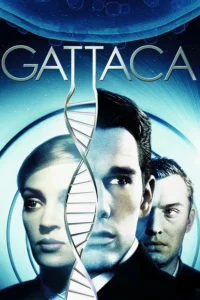
| 🎬 Title & Year | Gattaca (1997) |
| 🎥 Director | Andrew Niccol |
| 👥 Starring | Ethan Hawke, Uma Thurman, Jude Law, Loren Dean, Alan Arkin |
| 🕒 Genre / Runtime | Science Fiction / Drama • 106 minutes |
| 🔞 MPA Rating | PG-13 |
| ✝️ Core Faith Themes | Human Dignity, Identity, Calling, Perseverance, Discernment |
| 📖 Key Scripture | Genesis 32:24–28; Matthew 5:13–16 |
Table of Contents
In this Gattaca Christian Review, I want to begin with something simple: Gattaca was, in some ways, an uncomfortable film for me to watch. It was not simply because of genetic engineering or futuristic technology. In the world of the film, a person’s health, abilities, future, and even expected lifespan can all be judged from a single drop of blood and a genetic profile. As a Christian, I believe that human life and death ultimately belong to God.
Medicine and science can certainly identify genetic risks and estimate the likelihood of certain diseases, but information about what may happen should never become the final verdict on who a person is or what that person is capable of becoming. That is what made the world of Gattaca so unsettling to me. Human beings take limited knowledge and turn it into absolute authority, using it to decide the value, potential, and future of other human beings.
1. Can a Single Drop of Blood Decide a Person’s Entire Life?
Vincent is conceived naturally, and almost immediately after his birth, his genetic profile is analyzed. His risk of heart disease, his physical weaknesses, and even his expected lifespan are presented as numbers, almost as though the world has already declared, “This is as far as this child will go.” Yet what moved me in that scene was his parents’ response. Even though they are told that Vincent is genetically imperfect, they still choose to raise him with love. The world has already labeled him an “In-Valid,” but to his parents, he is first and foremost their son.
That moment felt warm to me because it reminded me that human worth comes before data. A person does not become less valuable because of a higher risk of disease, nor does a shorter predicted lifespan make someone less worthy of love. The society in Gattaca reduces Vincent to numbers, but love sees him first as a person.
Later, however, Vincent’s parents make a different decision when they have a second child. They choose favorable genetic traits for his younger brother, Anton. As expected, Anton grows up healthier, stronger, and physically superior to Vincent. From the beginning, society assigns the two brothers different categories. Vincent, conceived naturally, is considered “In-Valid,” while Anton, whose genes were carefully selected, is considered “Valid.” It is as though their futures have already been decided before either of them has had the chance to live.
That contrast was important to me. Vincent is loved, but he still grows up in a world that constantly tells him that he is less capable, less valuable, and less qualified. Anton, on the other hand, is given confidence by a system that assumes his superiority from the very beginning.
2. Human Judgment Does Not Have the Final Word
One of the biggest realizations I had while watching Gattaca came from the brothers’ game of chicken. Vincent and Anton swim farther and farther into the ocean, and the first one to turn back loses. By every measurable standard, Anton should win. He is healthier, stronger, and genetically designed to be superior to Vincent. Yet Vincent eventually beats him. Later, he explains why:
“I never saved anything for the swim back.”
That scene does not prove that human beings have no limits. Vincent still has a real heart condition, and determination does not make every biological limitation disappear. What the scene exposes is something different: the system around him has taken partial knowledge and turned it into a final verdict. His genetic profile may describe genuine risks, but the society of Gattaca assumes that those risks can also determine his ability, worth, and future.
That distinction matters to me. Human judgment is limited, even when it is supported by sophisticated data. People can underestimate someone, misread potential, or treat probability as destiny. Scripture repeatedly warns us against assuming that outward measures tell the whole truth about a person. In 1 Samuel 16:7, God reminds Samuel that human beings tend to look at outward appearance, while the Lord sees more deeply.
For Christians, that does not mean every barrier must be challenged or that every personal ambition automatically reflects God’s will. We are created beings with real limitations, and wisdom includes learning to accept some of them. But neither should we confuse society’s judgment with God’s final word about a person’s worth, purpose, or future. A human system can label someone “unqualified” and still be wrong.
That is one of the strongest things I take away from Gattaca: data may describe part of a human life, but it should not be allowed to explain the whole person.
3. Vincent Breaks Through His Limits, but That Does Not Make Every Method Right
The amount of effort Vincent puts into becoming an astronaut is extraordinary. He assumes Jerome Morrow’s identity, uses Jerome’s blood and urine, prepares hair and skin samples, and carefully manages every detail necessary to pass as someone genetically superior. He even endures the pain of having his legs broken and lengthened in order to match Jerome’s height. Throughout the film, there are repeated moments when his deception almost comes to light, and that constant tension is part of what makes the story so gripping.
Vincent truly works harder than almost anyone around him. Even after entering Gattaca, he proves that he can perform at the highest level. By the standards of his society, he is “In-Valid,” but through the way he actually lives, he shows that he is fully capable. He is not weak simply because a genetic report said he should be weak, and he is not incapable simply because the system classified him that way.
Still, that does not mean every choice he makes is right. He clearly uses a false identity and lives through another person’s genetic profile. This is where I am reminded of Jacob in Genesis. Jacob also deeply desired the birthright and the blessing. His longing was intense, but in the process, he deceived both his brother and his father. There was a genuine desire for blessing, but there were also deeply flawed methods.
Vincent is similar. He refuses to give up on his dream and resists the false limits imposed on him, but in order to reach that dream, he puts on someone else’s identity. That is why I do not think Gattaca should be read simply as a triumphant story about hard work and perseverance. The film contains courage and determination, but it also contains obsession, deception, and the cost of trying to force one’s way into a future.
For me, this is where the film becomes more interesting than a simple “never give up” story. Vincent’s desire to overcome a false limit is admirable, but his method also raises the question of whether a good desire can still lead us into wrong choices when we become desperate enough.
4. What Happens to Our Identity When We Live Through Someone Else’s DNA?
In order to reach space, Vincent becomes “Jerome.” He uses Jerome’s blood, urine, hair, skin samples, and name. To the outside world, Vincent appears to be Jerome Morrow, a man whose genetic profile gives him access to opportunities Vincent could never receive under his own identity. The disguise is so complete that almost everything the system sees belongs to another man.
But one truth never changes: Vincent is still Vincent.
That is part of the irony of his journey. He spends most of the film hiding the very identity that makes his achievement remarkable. If Vincent truly were Jerome, there would be nothing surprising about his qualifying for space travel. What exposes the failure of Gattaca’s system is precisely the fact that the person they classified as genetically inferior was capable of far more than their predictions allowed.
There is also a warning here. Vincent’s determination is admirable, but living through another person’s identity requires constant deception. His dream exposes the injustice of the system, yet his method also shows what desperation can do when someone believes there is no honest path available to him. That is why I do not want to turn his story into a simple message about “being yourself” or following every desire at any cost.
For Christians, identity is not built by successfully imitating another person’s life. We are given different gifts, responsibilities, relationships, circumstances, and opportunities, and faithfulness will not look identical for everyone. Ephesians 2:10 describes believers as God’s workmanship, created in Christ Jesus for good works. That does not give us a detailed blueprint for every career decision, but it does remind us that our lives do not need to become copies of someone else’s in order to have meaning.
Vincent ultimately does not prove, “I was really Jerome all along.” He proves something far more important:
the man they called In-Valid was never fully explained by the label they gave him.
5. The Final Urine Test Exposes the Limits of the “Valid” Label
The final urine test is one of the most memorable scenes in Gattaca. Vincent is about to leave for space when he is unexpectedly required to take one last test. He has no prepared sample, so the result reveals his real genetic identity. After everything he has done to hide himself, it appears that his entire journey is about to end at the final door.
But Dr. Lamar does not stop him.
Lamar tells Vincent about his own son, a boy who has not turned out exactly as genetic expectations promised and who admires Vincent. That detail matters because it suggests that Lamar has a personal reason to question the confidence of the system he serves. Vincent’s life has become evidence that genetic prediction, however useful it may be, cannot tell the whole story of what a person may become.
I do not read the scene simply as an examiner choosing to break the rules. By this point, Vincent has confronted Lamar with something the categories of “Valid” and “In-Valid” cannot easily explain. The system says Vincent should not belong there, yet his discipline, endurance, intelligence, and actual performance have repeatedly contradicted what his profile predicted.
That is what makes the scene powerful to me. Vincent does not change Lamar’s thinking through a speech or an argument. His life itself has exposed the limits of the label. A genetic category may contain real information, but it becomes dangerous when that information is treated as a complete definition of a human being.
The scene also prevents the film from becoming a simplistic rejection of science. The problem is not that genetic information tells us nothing. The problem is what happens when useful information is given authority it was never capable of carrying. A probability becomes a destiny. A risk becomes an identity. A classification becomes a verdict.
By allowing Vincent to pass, Lamar quietly acknowledges something the world of Gattaca has struggled to admit:
a human being is always more than the data used to describe him.
6. What Does It Mean to Wrestle With a Limit?
When I think about Gattaca as a whole, I keep coming back to the biblical story of Jacob. I do not mean that Vincent is a modern Jacob or that the two stories carry the same theological meaning. Jacob’s story belongs to the much larger biblical account of covenant, promise, sin, grace, and God’s purposes. Still, the image of wrestling helps me think about something both stories hold in tension: human longing, flawed methods, and the question of which limits we refuse to accept.
Jacob was born second to Esau and spent much of his life pursuing what seemed beyond his natural position. His longing for blessing was real, but so were his deceptions. By the time he reaches the Jabbok River in Genesis 32:24–28, he has spent years striving, manipulating, fleeing, working, and enduring the consequences of his choices. There he wrestles through the night and refuses to let go without a blessing. Yet the encounter does not end with Jacob simply proving how strong he is. He leaves wounded, humbled, and renamed.
Vincent also spends his life wrestling. He wrestles against his genetic profile, against his brother, against the social structure of Gattaca, and even against the limitations of his own body. His words, “I never saved anything for the swim back,” capture the intensity of that determination. But just as Jacob’s story is not simply a celebration of human willpower, I do not think Vincent’s story should be read that way either. His perseverance exposes a deeply unjust system, yet his journey also includes obsession, deception, physical suffering, and choices that should not automatically be justified simply because his goal is understandable.
That tension is what makes the comparison useful to me. Some limits are imposed by flawed human judgments and deserve to be challenged. Other limits remind us that we are not sovereign over our own lives. Faithful perseverance therefore requires more than determination; it requires discernment. The question is not simply whether I can break through a wall, but whether breaking through it is actually good, truthful, and faithful.
That is why I resist turning Gattaca into a Christian version of “Believe in yourself and you can do anything.” Human determination is powerful, but it is not ultimate. Nor is every desire automatically a calling from God. Vincent’s story is most compelling when it exposes how dangerous it is for human beings to decide too confidently what another person can never become.
The question I am left with is therefore not,
“Can I overcome every limit?”
It is this: Am I challenging a false judgment that has been placed upon me, or am I trying to force my own desire into something I have already decided God must approve?
Perhaps faithful perseverance is not about tearing down every limit, but about learning to challenge unjust barriers without confusing our own desires with the will of God.
Comparative Analysis: Vincent and Jacob — Wrestling Against the Limits Before Them
| Theme | Vincent in Gattaca | Jacob in Genesis |
|---|---|---|
| Birth & Limitation | Born naturally and labeled “In-Valid” before he has a chance to prove himself. | Born second to Esau and unable to claim the birthright by natural order. |
| Longing | Longs to reach space despite a system that says he does not belong there. | Longs for the birthright and blessing associated with the firstborn. |
| Deception | Assumes Jerome’s genetic identity to enter Gattaca. | Uses deception to obtain Isaac’s blessing intended for Esau. |
| Wrestling | Pushes his body, identity, and determination to their limits. | Wrestles through the night at the Jabbok and refuses to let go without a blessing. |
| Identity | Ultimately proves that his true identity as Vincent matters more than the borrowed identity of Jerome. | Leaves the encounter with a new name, Israel, and a changed understanding of strength. |
Key Takeaways & Faith Insights
- Human worth cannot be reduced to data: Our health, abilities, genetics, or predicted future may describe part of our condition, but they do not determine the full worth of a human life. Genesis 1:27
- The limits people place on us are not always the limits God has placed on us: Human judgment is incomplete, and the world can call someone unqualified while still being wrong about what that person can become. 1 Samuel 16:7
- A good desire does not make every method right: Vincent’s determination is admirable, but his deception reminds us that even meaningful goals can lead us toward wrong choices when we try to force the outcome ourselves. Proverbs 10:9
- We are not called to live someone else’s identity: Comparison may tempt us to wish for another person’s gifts, circumstances, or path, but God calls us to live faithfully within the life and work prepared for us. Ephesians 2:10
- Faith should become visible in the way we live: Christians do not need worldly greatness, but our integrity, diligence, love, and faithfulness should allow others to see something different in us. Matthew 5:13–16
- Faithful wrestling requires discernment: Some walls are false limits that should be challenged, while others remind us that we are creatures who must trust the God who knows our path better than we do. Genesis 32:24–28
“I never saved anything for the swim back.”
Vincent Freeman
Explore More Screen Devotions:
- 🎨 Animation: Spiritual Insights in Animated Films
- 🌍 Documentaries: Biblical Perspectives on Real-World Issues
Scripture taken from the Holy Bible, NEW INTERNATIONAL VERSION®, NIV® Copyright © 1973, 1978, 1984, 2011 by Biblica, Inc.® Used by permission. All rights reserved worldwide.