
The Lord of the Rings: The Two Towers: What Do We Hold On To When Everything Tells Us to Give Up?
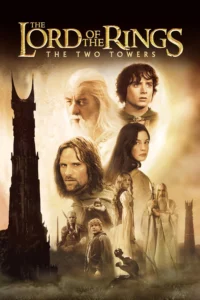
| 🎬 Title & Year | The Lord of the Rings: The Two Towers (2002) |
| 🎥 Director | Peter Jackson |
| 👥 Starring | Elijah Wood, Ian McKellen, Viggo Mortensen, Sean Astin, Andy Serkis, Bernard Hill, Miranda Otto, David Wenham, Orlando Bloom, John Rhys-Davies |
| 🕒 Genre / Runtime | Fantasy, Adventure, Epic • 179 minutes |
| 🔞 MPA Rating | PG-13 |
| ✝️ Core Faith Themes | Hope, Faithfulness, Discernment, Repentance, Mercy, Identity, Patience, Courage |
| 📖 Key Scripture | Romans 8:24–25; Proverbs 4:23; Matthew 10:16; Galatians 1:10; Romans 12:21 |
Table of Contents
Welcome at last to The Lord of the Rings: The Two Towers. If you have not yet seen The Fellowship of the Ring, I strongly recommend starting there first. In the first film, the Fellowship is formed, and we reflected on the mission entrusted to a small hobbit named Frodo and the community that gathers around him. By the time we enter the second film, however, everything has changed. The Fellowship has been scattered, and each character must now face a different struggle in a different part of Middle-earth.
I actually think this is part of what makes The Two Towers so compelling. When people are together, they can encourage and strengthen one another. Once they are separated, however, what each person truly believes and chooses becomes much clearer. Frodo and Sam continue toward Mordor with Gollum. Aragorn, Legolas, and Gimli make their way into Rohan. King Théoden must confront both the broken condition of his kingdom and the broken state of his own life. Merry and Pippin, who once seemed like little more than troublemakers, begin influencing the course of the war in ways no one could have expected.
For me, the Lord of the Rings Two Towers biblical themes become most meaningful when these separate journeys are viewed together. I do not want to treat these characters merely as figures in a fantasy story. I want to bring together the Christian worldview through which I learned to engage with film during my film studies and my own experiences of faith. As I mentioned in my reflection on the first film, I do not want to force the story into a rigid one-to-one allegory where Frodo is Jesus, Gandalf is a prophet, and the Ring is simply sin. I would rather ask a more personal question:
Which of these characters reflects something about who I am today?
1. Gríma Wormtongue: The Voices That Shape Us
When we first meet King Théoden of Rohan, he is far from the king he once was. He has grown weak under Saruman’s influence and can no longer see clearly what is happening in his own kingdom. Standing beside him is Gríma Wormtongue, constantly offering poisonous counsel and separating the king from the people and reality around him.
It is easy to look at Gríma and immediately recognize that something is wrong with him. But when I watch these scenes, a different question comes to mind: Who, or what, is constantly whispering into my thoughts? Voices like Gríma’s can exist in our own lives as well.
They do not always come from another person. They may take the form of thoughts that repeatedly pull us away from God, values absorbed from the world around us, or desires already living within us. Thoughts such as “Never talk to that person again,” “Just take care of yourself,” “What good is church community anyway?” or “Do you really think prayer will change anything?” can enter our minds so naturally that we may not notice how much influence they are gaining.
Scripture repeatedly calls us to discernment because not every voice speaks the truth. From the beginning of Genesis, humanity was confronted with the distorted question, “Did God really say that?” Even now, our faith is shaped by what we repeatedly listen to and what we eventually accept as true.
And if I look at myself honestly, I may sometimes be Théoden, but I may also become Gríma. Are my words creating distance within my family? Are my judgments contributing to division between friends? Are the things I say in church building people up, or are they creating more confusion within the community? Gríma may not exist only in Middle-earth. We also need to ask both what kind of voices we are listening to and what kind of voice we are becoming in the lives of others.
2. Théoden Awakens to Reality
Eventually, Gandalf the White appears before Théoden, and the king is freed from the influence that has held him for so long. His strength begins to return, his clouded mind clears, and he is able to see reality again. Whenever I watch this scene, I am reminded of the parable of the prodigal son. I do not mean that Gandalf represents Jesus or that Théoden literally represents the prodigal son. What reminds me of the parable is the image of someone who has spent a long time under the wrong influence suddenly waking up and facing reality and responsibility again.
The prodigal son loses everything in a distant country before finally coming to his senses and returning to his father. Something similar can happen in our spiritual lives. We may say that we believe in God while gradually becoming consumed by recognition, money, success, pleasure, pride, or other desires. As our relationship with God grows more distant, we may not even recognize what is happening at first.
But waking up does not simply mean feeling better. When Théoden regains himself, the reality waiting for him is painful. His son is dead, his kingdom is under attack, and his people are in danger. His recovery does not erase those problems. In fact, because he has recovered, he must now face them again as king.
I think this gives us an important picture of repentance. Returning to God does not mean that every consequence of our choices or every problem in our lives immediately disappears. Grace does not always erase the reality we must face. But when we wake up again before God, we become able to stop avoiding reality and begin facing the responsibilities in front of us.
We can also find ourselves in different places within this story. Sometimes we may be like Gandalf, helping someone find their way back. Sometimes we may be Théoden, needing to wake up ourselves. And sometimes, unfortunately, we may become like Gríma, bringing confusion into someone else’s life through our words or actions.
The question is not simply which character is good or evil.
Where am I standing today?
3. Helm’s Deep and Faithfulness Against Impossible Odds
I have always loved films with large-scale battles. The Lord of the Rings is my favorite film series of all time, and if I had to choose one unforgettable sequence from The Two Towers, the Battle of Helm’s Deep would certainly be near the top. If I had to choose only one battle from the entire trilogy, however, I would probably choose the Battle of Minas Tirith in The Return of the King. I will save that discussion for the third film.
At Helm’s Deep, the enormous Uruk-hai army outside the walls makes victory seem almost impossible from the beginning. In the film, Haldir leads Elven archers to reinforce Rohan, yet even with their help the difference in numbers remains overwhelming. Interestingly, that Elven force at Helm’s Deep was created for the film adaptation rather than appearing in Tolkien’s original account.
Watching this battle also reminds me of David and Goliath. I am not saying that the Uruk-hai represent Goliath. The connection for me is the experience of standing before something so overwhelming that victory seems impossible. When the Israelite army looked at Goliath, they saw his size, strength, and weapons. David did not somehow imagine that Goliath was small. Goliath was enormous to him too.
Faith does not require us to pretend that our problems are smaller than they really are. The army outside Helm’s Deep truly is massive. The wall really does fall. People really do die. The situation genuinely is desperate.
But perhaps faithfulness means refusing to abandon what is right simply because the situation in front of us looks hopeless.
There are seasons in our own lives that can feel like Helm’s Deep. An unresolved family problem, financial pressure, broken relationships, spiritual dryness, illness, or an uncertain future may feel like an army standing outside the walls. In moments like these, do we remain faithful only after we become confident that we will win? Or can we continue doing what is right even when the outcome remains hidden?
Faith is not pretending the army is small.
Sometimes faith is standing at the wall while knowing exactly how large it is.
4. Gandalf’s Return: Holding On Until Hope Appears
Before leaving, Gandalf tells Aragorn to look toward the east at first light on the fifth day. I do not know exactly why, but that promise has always moved me deeply.
Helm’s Deep is almost completely lost. Even Aragorn, Legolas, and Gimli, who so often seem nearly unstoppable, cannot reverse the situation against such overwhelming numbers. The walls collapse, the soldiers continue retreating, and behind them are children and families who cannot defend themselves. There is almost nowhere left to go.
Théoden begins to believe the end has come, but Aragorn remembers Gandalf’s words:
“Look to the east.”
Théoden then rides out with the few soldiers who remain. What strikes me is that they do not charge because victory has already become visible. They move while the situation still looks hopeless. Only afterward, on the hill above them, do Gandalf and the Rohirrim appear.
Whenever I watch this scene, I think about what it means to wait in faith. Sometimes we ask God, “How long?” We pray, yet the situation seems unchanged. We say that we trust His promises, but all we can see in front of us is another broken wall. We look at the world and feel as though everything is becoming darker.
Christians, however, have promises to hold on to. We have Scripture, and ultimately we have Christ’s promise that He will return. This does not mean Gandalf represents Jesus. The scene simply reminds me that a promise does not cease to be true simply because its fulfillment is not yet visible.
I also love the sense throughout this sequence that they are not fighting alone. The first film reminded us that Frodo had Sam, Aragorn, Legolas, Gimli, and others beside him. Our own lives can reflect that truth as well. God often strengthens us through community, sometimes using people we never expected to help us stand again.
The cry “To the King!” also carries a powerful image for me. If, at the end of our lives, we can run toward our Lord, what greater joy could there be? Yet perhaps that is not only something to imagine at the end of life. We can turn toward our King today. In fear, exhaustion, uncertainty, and hope, we can still run toward Him.
5. Sméagol and Gollum: The Battle We Keep Feeding
Now let us leave Helm’s Deep and return to Frodo, Sam, and Gollum. One of the most fascinating figures in the second film is Gollum, or Sméagol. The scene in which Frodo and Sam are asleep while Sméagol argues with Gollum through his own reflection is one of the film’s most memorable moments.
I do not want to treat this scene as a medical depiction of a dissociative disorder. What interests me is the way the film visually presents an intense inner conflict within one person. One side wants to change, while the other calls him back toward familiar desires. One side wants to trust Frodo, while the other urges suspicion and betrayal.
It is difficult to watch this conflict without recognizing something familiar. We also experience competing desires, repeated habits, and the struggle between sin and change. In Romans 7, Paul describes the frustration of wanting to do what is good while still finding himself doing what he hates. We may recognize something similar in our own spiritual lives. We know that we should forgive, yet part of us still wants to hold on to anger. We know that we should be honest, yet we are tempted to hide just a little. We know we should pray, but everything else somehow comes first. We know a habit needs to end, yet we tell ourselves, “Just one more time.”
The struggle between Sméagol and Gollum makes me ask:
Which voice inside me am I feeding today?
What we repeatedly watch, listen to, think about, and practice can strengthen certain desires within us. The struggle with sin does not always arrive through one dramatic moment. Sometimes one voice becomes stronger through hundreds of small choices repeated over time.
6. Frodo and Gollum: Compassion With Discernment
In the first film, we reflected on Gollum through the theme of mercy. Does someone like Gollum still deserve mercy? If his story has not reached its final chapter, should we be so quick to write the ending for him ourselves?
In The Two Towers, I think we can take that question one step further:
Is showing compassion the same thing as offering unconditional trust?
Frodo sees something of himself in Gollum. Both understand the Ring’s power, and Frodo knows that Gollum was not always the creature standing before him. He was once Sméagol. Because of that, Frodo does not view him simply as something disgusting that should be destroyed. Sam, however, remains deeply suspicious.
As viewers, we may naturally be drawn toward Frodo’s compassion, but that does not mean Sam’s caution is entirely wrong. This creates an important question for our own relationships. Christians are called to forgive, love, and even pray for their enemies. But love does not require the removal of every boundary. Forgiving someone does not automatically mean restoring exactly the same level of trust immediately. When someone repeatedly causes harm, healthy boundaries may still be necessary.
Jesus taught love and mercy, but He also told His disciples to be wise as serpents and innocent as doves. Between Frodo’s compassion and Sam’s caution, we are left with an important question:
Am I judging people too quickly, or am I abandoning necessary discernment in the name of love?
Compassion and discernment do not have to oppose one another.
7. Faramir Under the Weight of Expectation
When I look at Faramir and Boromir, I honestly see something of myself.
Faramir lives in the shadow of his older brother and under the weight of his father’s expectations. This becomes even more painful as the trilogy continues, so I will explore it more deeply when I write about The Return of the King. Even in The Two Towers, however, Faramir gives us a meaningful way to think about family expectations, sibling comparison, and the desire for approval.
I grew up under very strict and thorough parental guidance. I was always trying to show my parents the best possible version of myself. I felt that I needed to succeed, meet expectations, and avoid showing weakness. Over time, there were moments when it became difficult for me to reveal who I really was. There were even periods when I was not entirely sure who I was myself.
I found it difficult to distinguish between two questions:
“Do I truly want this?”
and
“Do I want this because other people want me to want it?”
Something similar can happen in faith. We are called to please God and live for His glory, but glorifying God does not mean destroying ourselves physically or emotionally in order to prove our devotion. God’s love is not a reward given only after we have performed well enough, and we do not have to present Him with a perfectly successful version of ourselves before we can be loved.
We also need to examine the way we treat people within our families, friendships, and churches. “Your brother can do it, so why can’t you?” “That person serves much more than you do.” “Look at someone else’s child. Why isn’t ours like that?” Comparison can sometimes disguise itself as motivation, but repeated comparison can communicate a much deeper message:
“Who you are is not enough.”
Faramir makes me ask two questions:
Am I losing the person God created me to be while trying to satisfy someone else’s expectations?
And just as importantly:
Am I giving the people I love enough room to become who they truly are?
8. Merry and Pippin: When Silence Is No Longer Neutral
Now let us return to Merry and Pippin, the two troublemakers. After the first film, who would have expected them to play such an important role in the war for Middle-earth?
In Fangorn Forest, they meet Treebeard and the Ents and try to convince them that Saruman’s war matters to them too. The Ents, however, are reluctant to become involved.
Then Treebeard sees the forest Saruman has destroyed, and everything changes. He can no longer claim that this conflict has nothing to do with him.
That moment reminded me of Avatar. In the first Avatar, humans continue exploiting and destroying Pandora until the natural world itself eventually responds. I am not saying that the Ents and Eywa are equivalent. What connects the two scenes for me is the image of those who have watched silently for a long time finally reaching a point where silence is no longer possible.
We often say similar things ourselves: “That is not my problem.” “Someone else will take care of it.” “That conflict has nothing to do with me.” Of course, we cannot personally intervene in every problem in the world, and not every situation requires immediate action from us.
But there are moments when doing nothing becomes a choice of its own.
In the parable of the Good Samaritan, the wounded man was not only surrounded by the consequences of violence. He was also passed by people who saw him and chose not to stop.
Merry and Pippin are small, and they are certainly not great warriors. But they help the Ents see what has been happening around them. Sometimes changing the world does not begin with solving everything ourselves.
Sometimes it begins by helping someone else see what they have learned to ignore.
9. The Ents and the Slow Work of Growth
Another fascinating thing about the Ents is how incredibly slow they are. They speak slowly, think slowly, and take an enormous amount of time to reach decisions. To Merry and Pippin, who understand the urgency of the situation, this is almost unbearable.
But I do not think slowness is always a weakness.
We live in an incredibly fast world. We want quick results, quick growth, quick success, and even quick answers to prayer. Churches can become focused on rapid growth, and individuals can expect immediate spiritual transformation.
But some things simply do not grow quickly.
Trees do not.
Trust does not.
Maturity does not.
Healing does not.
Faith often does not either.
Praying today does not mean my character will be completely transformed tomorrow. Forgiving someone once does not necessarily mean every wound disappears immediately. Just as children need time to grow, our spiritual lives also require time.
The Ents are slow, but once they finally decide to move, their strength is overwhelming. That makes me think about patience. Moving slowly is not the same as doing nothing. Taking time to think deeply, grow roots, and then act can create a kind of strength that is not easily shaken.
Perhaps our faith should grow in the same way: deeper roots rather than quick emotional highs, lasting obedience rather than impulsive decisions, and steady faithfulness rather than immediate results.
10. Sam and the Good Still Worth Fighting For
Eventually, we come to Sam.
When I think about the ending of The Two Towers, I cannot leave him out. The characters in this film pass through one desperate situation after another. At Helm’s Deep, people endure a battle that appears impossible to win. Merry and Pippin help move the Ents toward a war they had wanted nothing to do with. Frodo and Sam move closer to Mordor, becoming increasingly aware of how dangerous the road ahead really is.
And yet Sam still believes that there is good in this world worth fighting for.
I do not think this is simple optimism. Optimism can sometimes ignore reality and say, “Everything will be fine.” Sam does not ignore reality. He is afraid. He sees Frodo being affected more and more by the Ring. He understands how dangerous their journey has become.
Yet he still believes that goodness is worth holding on to.
That, to me, resembles Christian hope.
Christian hope does not say, “The world is not really that bad.” The world truly is broken. There is sin, war, death, betrayal, suffering, injustice, and loss.
Yet we still believe that God is good.
Because of that, love is worth choosing. Forgiveness is worth offering. Truth is worth living by. Mercy is worth showing. Faithfulness is worth practicing.
And faith is worth holding on to.
Looking back across The Two Towers, each character seems to face this question in a different way. Will I listen to Gríma’s voice or learn to discern the truth? Will I wake up like Théoden? Will I remain faithful even when Helm’s Deep looks impossible to defend? Can I keep looking east when the promise is not yet visible? Which voice will I feed in the struggle between Sméagol and Gollum?
Can I show compassion without abandoning discernment? Can I resist allowing other people’s expectations to define me as I reflect on Faramir? Can I step out of the comfort of saying, “It is not my problem,” like Merry and Pippin eventually do? And can I move when it is finally time to move, even if growth and discernment have taken a long time, like the Ents?
I think The Two Towers asks us all of these questions.
In the first film, the Fellowship begins the journey together. In the second, they are scattered. And once they are scattered, their individual choices become visible.
Perhaps our faith works in a similar way.
When we worship together inside a church, it may look as though we are all walking the same road. But when Monday comes and we scatter into our homes, workplaces, and schools, what we truly hold on to becomes much clearer.
Every day, we face whispers like Gríma’s and inner conflicts like the struggle between Gollum and Sméagol. Sometimes we stand before circumstances that feel as impossible as Helm’s Deep. At other times, we may feel as small and powerless as Merry and Pippin. Yet Jesus told His disciples to be wise as serpents and innocent as doves. We are called to discern while still loving, to wait while still acting, to hope without denying suffering, and to rise again when we have fallen.
And just as Gandalf told Aragorn to look toward the east, we also live while looking toward a promise.
We wait for Christ to return.
We turn toward our King even now.
And when everything around us tells us to give up, I hope we can still confess:
There is still good in this world worth fighting for.
I pray that you and I will continue to live faithfully for that good.
Key Takeaways & Faith Insights
- Be Careful Which Voice Shapes Your Heart: The voices we repeatedly listen to influence the way we think and choose. Like Gríma’s whispers, we need to discern the voices that slowly pull us away from God and from the people around us. Proverbs 4:23
- Waking Up Means Facing Reality Again: Recovery and repentance do not mean every problem immediately disappears. Sometimes returning to God means becoming willing to face reality and responsibility again. Luke 15:17–20
- Faithfulness Does Not Depend on Good Odds: An overwhelming situation does not automatically mean that we should abandon what is right. Faith does not deny the size of the problem; it continues trusting God even when the outcome remains uncertain. 1 Samuel 17:45–47
- Hope Can Remain Before the Answer Appears: The fact that we cannot yet see the fulfillment of God’s promise does not mean the promise has disappeared. We can continue holding on to His Word while we wait. Romans 8:24–25
- Pay Attention to Which Desire You Are Feeding: Conflicting desires can exist within us. Our repeated choices and habits may strengthen one desire over another, so we need to pay attention to what we are feeding within ourselves. Romans 7:21–25
- Compassion and Discernment Can Exist Together: Showing mercy does not require blind trust. We can love and forgive others while still maintaining wise boundaries and exercising discernment. Matthew 10:16
- You Do Not Have to Live by Comparison: Our identity should not be built around satisfying the expectations of family or community. We should also examine whether our comparisons are communicating to the people we love that who they are is not enough. Galatians 1:10
- Sometimes Doing Nothing Is Still a Choice: We cannot personally intervene in every problem, but when we clearly have an opportunity to do what is right, continually looking away can become a moral choice of its own. James 4:17
- Deep Growth Often Takes Time: Faith, maturity, healing, and trust do not always grow quickly. Growth that takes time to develop deep roots may also become growth that lasts. James 1:4
- There Is Still Good Worth Fighting For: Christian hope is not optimism that ignores evil. It sees evil clearly and still believes that goodness is worth pursuing, and that we are called not to be overcome by evil but to overcome evil with good. Romans 12:21
“There’s some good in this world, Mr. Frodo… and it’s worth fighting for.”
Samwise Gamgee
Explore More Screen Devotions:
- 🎨 Animation: Spiritual Insights in Animated Films
- 🌍 Documentaries: Biblical Perspectives on Real-World Issues
Scripture taken from the Holy Bible, NEW INTERNATIONAL VERSION®, NIV® Copyright © 1973, 1978, 1984, 2011 by Biblica, Inc.® Used by permission. All rights reserved worldwide.