
Moana 2: When Calling Becomes Responsibility
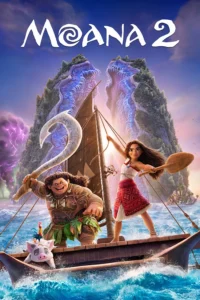
| 🎬 Title & Year | Moana 2 (2024) |
| 🎥 Directors | David Derrick Jr., Jason Hand, Dana Ledoux Miller |
| 👥 Starring | Auliʻi Cravalho, Dwayne Johnson, Hualālai Chung, Rose Matafeo, David Fane, Awhimai Fraser |
| 🕒 Genre / Runtime | Animation, Adventure, Family, Fantasy, Musical • 100 minutes |
| 🔞 MPA Rating | PG |
| ✝️ Core Faith Themes | Calling, Responsibility, Servant Leadership, Reconciliation, Sacrifice, Legacy |
| 📖 Key Scripture | Ephesians 2:10; Mark 10:42–45; Psalm 78:4–7; Hebrews 12:1 |
Table of Contents
Do you remember “I Am Moana” from the first Moana? In the first film, we focused on Moana discovering her identity and responding to the calling placed before her. “Who am I?” and “Where am I being called to go?” were important questions at the heart of that story. Moana realizes that she is not confined to the role of a chief’s daughter. By venturing beyond the reef, she begins to understand more clearly who she is and what she has been called to do.
So what question should we ask in the second film? I think Moana 2 takes us one step beyond the first movie. Moana is no longer someone who does not know who she is. She understands her identity, and she has already stepped into the role that has been given to her. The next question naturally becomes this:
“Now that I know who I am, what am I going to do with that identity and calling?”
That is why, in Moana 2, rather than returning to the question of identity itself, I want to focus on responsibility, leadership, connection, legacy, sacrifice, and the next generation. These Moana 2 biblical themes move the story beyond simply discovering a calling. Knowing who I am matters, but just as important is what I do with that knowledge—how I serve others, what kind of community I help build, and what I leave behind for the generation that comes after me.
Recently, while reflecting on The Lord of the Rings: The Fellowship of the Ring, I wrote that Frodo’s mission was never a journey he had to complete entirely by himself. Frodo had Sam, Aragorn, Legolas, Gimli, and others who helped him along the way. We see something similar in Moana 2. Maui is still there, of course, but this time Moana also sails with new companions such as Loto, Moni, and Kele. Yet there is an important difference from the first film. In the first movie, Moana was learning to find her own path. In the second, she has become someone who must learn how to move forward with others.
1. Calling Becomes Responsibility
In the Christian life, we often use the phrase “God’s calling.” We ask what we are supposed to do, what kind of work we are meant to give ourselves to, and what path God may be leading us toward. Those are important questions. But sometimes we can think about calling too romantically, as though once God reveals a purpose to us, everything will suddenly become clear and all we have to do is happily walk down that road.
But I think an even bigger question begins after we discover our calling:
Am I ready to accept the responsibility that comes with that calling?
In the first film, Moana discovered that she was called to go beyond the reef. But in the second, she can no longer remain simply a young woman trying to understand herself. Her choices now affect not only her own life, but also her community and the people traveling with her. I think this is what growth often looks like. At first, we ask, “Who am I?” But eventually, the question becomes, “Now that I know who I am, what am I going to do for others?”
Ephesians 2:10 says that we are God’s workmanship, created for good works. In the first film, this verse could be considered through the lens of identity and calling. In the second, it also invites us to think about how calling becomes responsibility in real life. If God has given me certain gifts, a certain position, or certain opportunities, those things may not exist simply to reassure me that I am special. They may also come with the responsibility to serve others and help build up a community.
Calling is a privilege, but it is also a responsibility.
2. A Leader Does Not Just Go First
One of the things that stands out to me in this film is Moana’s leadership. Loto, Moni, and Kele all have different personalities, strengths, and ways of approaching problems. Moana has to sail with them toward a shared purpose. This is where I see one of the clearest developments between the first and second films. In the first movie, Moana was learning where she herself needed to go. In the second, she becomes a leader who must learn how to move forward with other people.
When I look at different kinds of leaders, I often think about two broad approaches to leadership. One is the kind of leader who strongly presents a direction and expects others to follow. There are certainly situations where this kind of leadership is necessary. Sometimes a leader needs to make a clear decision and firmly show the way forward. But there is another kind of leadership as well: a leader who works with the people around them, connects different personalities and abilities, and becomes a bridge that helps the whole team move together.
That does not mean the leader and the team members have exactly the same role. A leader still carries responsibility and authority. But authority does not have to mean pushing people down in order to make them obey. It can also mean creating the conditions in which different people can contribute, work together, and move toward the same goal.
I think Moana is closer to this second kind of leader. Rather than trying to solve everything by herself, she learns to work with the people sailing beside her and to make room for their abilities. Jesus also described leadership in a way very different from the world’s usual model of power. In Mark 10:42–45, He contrasts rulers who exercise authority over others with a model of greatness rooted in service. Christian leadership does not eliminate authority. It changes what authority is for. Its purpose is not to make others dependent on me, but to help them carry out the roles entrusted to them.
So perhaps the question a good leader needs to ask is not only, “How well are people following me?” but also,
“Am I helping these people work together, and am I creating space for each person’s gifts to be used?”
3. Motufetu — Reconnecting What Has Been Divided
One of the things that impressed me most in Moana 2 is that Moana’s mission does not end with simply protecting her own island. Her journey expands into something larger: reconnecting people and islands that had been separated from one another. That made me think about the image of a bridge.
There is so much division in our world. Even within families, there are people who no longer speak to one another. Friendships can end because of a single conflict. Within churches, generations can become separated, cultures can divide people, and sometimes even those who believe in the same God can grow distant because they no longer understand one another. In situations like these, someone has to become a bridge.
I believe I need to become that kind of person, and I believe we all have opportunities to play that role in our families, friendships, and church communities. On an even larger level, I believe the church should also play that kind of role in the world. The church is called not only to proclaim the gospel of reconciliation with God, but also to become a community in which people who have grown distant can learn to listen, forgive, and move toward one another again.
In Ephesians 2:14–19, Paul writes about Christ breaking down the dividing wall and bringing together those who had been separated. Of course, I am not trying to turn the islands in Moana 2 into a direct one-to-one symbol of this passage. But the image of divided communities being reconnected can still raise an important spiritual question for us:
Am I someone who deepens division, or someone who helps restore connection?
Strong, decisive leadership is sometimes necessary. But perhaps one of the most important forms of leadership is the ability to become a bridge between people who are different from one another.
4. Your Calling Is Bigger Than Your Own Generation
Simea is one of the characters I find especially meaningful in this film. She is not simply Moana’s adorable little sister. When I look at Simea, I think Moana’s choices lead us toward a larger question:
What kind of world are we leaving behind for the next generation?
In church, we often pray for the next generation. “Please help our children continue to believe in God.” “Please keep the next generation from walking away from the church.” “Please allow faith to continue from one generation to the next.” I believe prayers like these are important. But I do not think prayer should be where it ends.
If we want to pass faith on to the next generation, then we first need to show them a faith they can actually see. If I tell children to trust God while I myself live as though I do not trust Him, what will they learn? If I teach them to love others while I easily hold hatred toward people, what kind of faith am I showing them? If I tell them that church is important while I constantly contribute to division, criticism, and conflict within the church, then the next generation may remember our actions far more clearly than our words.
Psalm 78:4–7 speaks about not hiding the works of God from the next generation, but telling them what He has done. I do not think this means only teaching Bible stories. Showing through our own lives, “This is what it looks like to live as someone who trusts God,” can also be part of passing faith on.
The way Moana lives becomes part of the story Simea sees. In the same way, our lives also become a story of faith for someone else. So perhaps one of the most important questions we can ask when thinking about the next generation is this:
“Am I living the kind of faith that I would want the next generation to imitate?”
Pray for them. But also show them.
5. The Mission May Cost More Than You Expected
When we talk about calling and responsibility, we cannot leave out sacrifice. We like the idea of discovering the purpose God has given us, but it is much harder to think about what we may need to give up in order to live out that purpose. Yet in real life, greater responsibility often comes with greater cost.
Moana’s journey is not simply a journey for herself. She takes risks for the people she loves and for her community, and she faces moments when she must choose a purpose larger than her own safety. I do not want to turn this into a direct interpretation in which “Moana’s sacrifice represents the sacrifice of Jesus.” But I do think the story gives us room to reflect on the fact that calling can come with a cost.
Jesus did not tell His disciples that following Him would simply lead to a comfortable and pleasant life. In Luke 14:28, He speaks about counting the cost before beginning something. Faith is not simply a way to receive everything I want. Sometimes it requires me to let go of something I want for the sake of something more important.
Leadership works the same way. Leadership is not only about applause and recognition. There are moments when a leader has to accept responsibility before anyone else does. A leader may need to carry concerns that others do not even see and sometimes set aside personal desires for the sake of the whole community.
So when we talk about calling, I think we also need to ask this question:
“Do I only love the idea of the purpose God has given me, or am I also willing to accept the responsibility and cost that come with it?”
6. You Are Part of a Story That Began Before You
In the world of Moana, ancestors and previous generations continue to hold an important place. Moana is not someone who begins a completely new story out of nothing. People crossed the ocean before she did, and their memories, choices, and stories continue into her own life.
I think this resembles our faith as well. We did not invent Christianity by ourselves. There were believers before us—countless people who preserved Scripture, shared the gospel, built churches, taught the faith, and carried it forward. For some people, those figures may have been parents or grandparents. For others, it may have been a pastor, a Sunday school teacher, or a friend who first showed them what it looked like to walk in faith.
Hebrews 12:1 speaks of the great cloud of witnesses surrounding us. We receive the story of those who ran before us, and now we are running our own race. But the important thing is not only that we have received a legacy. It is also that we are leaving a legacy for someone else.
We stand between the generations that came before us and the generations that will come after us. Simply preserving the faith we received may not be enough. We need to live that faith in our own lives and pass it on in a way that allows someone else to continue the journey.
So Moana’s story may have begun in the first film with the question, “Who am I?” But in the second film, that question expands into something much larger:
“Now that I know who I am, who will I serve with that identity and calling, what will I help reconnect, and what will I leave behind for the next generation?”
This is where I think Moana 2 differs most clearly from the first film. Faith does not end with discovering who I am. Once I begin to understand who God has called me to be, I also need to ask how that identity is shaping the way I live with other people.
What kind of leader am I? Am I someone who helps restore broken relationships? What kind of faith am I showing the next generation? How am I carrying forward the legacy I received? And am I willing to accept the responsibility and sacrifice that may come with my calling?
If the Moana of the first film could say, “I am Moana,” then perhaps the Moana of the second film now stands before the next question:
“Now that I know who I am, how will I live out that identity?”
Perhaps our growth in faith looks something like this as well. Discovering who I am in God is deeply important. But that is not the finish line. It is the starting point. A person who discovers identity eventually learns responsibility. A person who learns responsibility begins to serve others. And a person who learns to serve others begins to look beyond his or her own life toward the next generation.
And someday, even after we are gone, someone else may walk across the bridges we helped build.
Key Takeaways & Faith Insights
- Calling Becomes Responsibility: Calling does not end with discovering that God has given us purpose. The gifts, opportunities, and responsibilities He gives us are also meant to be used in service to others and for the good works He has prepared for us. Ephesians 2:10
- Leadership Builds Bridges, Not Just Followers: Good leadership is not about proving our authority or making people dependent on us. It is about serving, connecting different people, and helping each person use the gifts they have been given. Mark 10:42–45
- Faith Should Reconnect What Has Been Divided: Just as Moana’s journey expands toward reconnecting people who had been separated, Christians should seek to become people of reconciliation in families, friendships, churches, and communities rather than adding to division. Ephesians 2:14–19
- The Next Generation Needs More Than Our Prayers: Praying for the next generation is important, but prayer should also be accompanied by example. Through both our words and our lives, we should show them a faith worth following. Psalm 78:4–7
- Calling Often Comes With a Cost: Living out God’s purpose can involve responsibility and sacrifice. Loving a calling also means being willing to accept the cost that may come with it. Luke 14:28
- We Inherit a Story, and We Add to It: We have inherited a legacy from those who walked the path of faith before us. At the same time, the way we live today becomes part of the story of faith that the next generation will receive. Hebrews 12:1
“Who are you gonna be?”
Maui
Explore More Screen Devotions:
- 🎬 Movies: Explore Other Faith-Based Film Reflections
- 🌍 Documentaries: Biblical Perspectives on Real-World Issues
Scripture taken from the Holy Bible, NEW INTERNATIONAL VERSION®, NIV® Copyright © 1973, 1978, 1984, 2011 by Biblica, Inc.® Used by permission. All rights reserved worldwide.